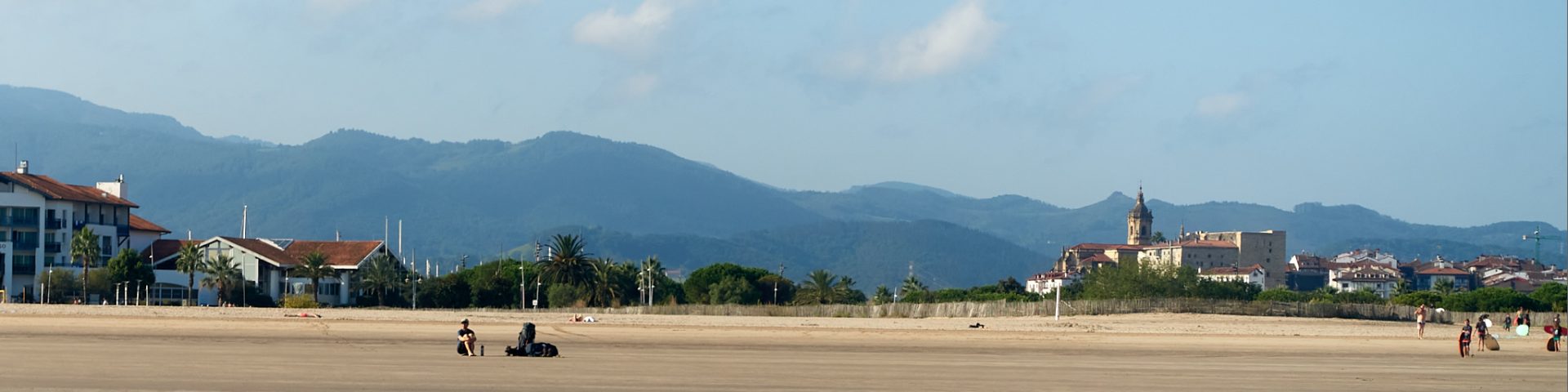
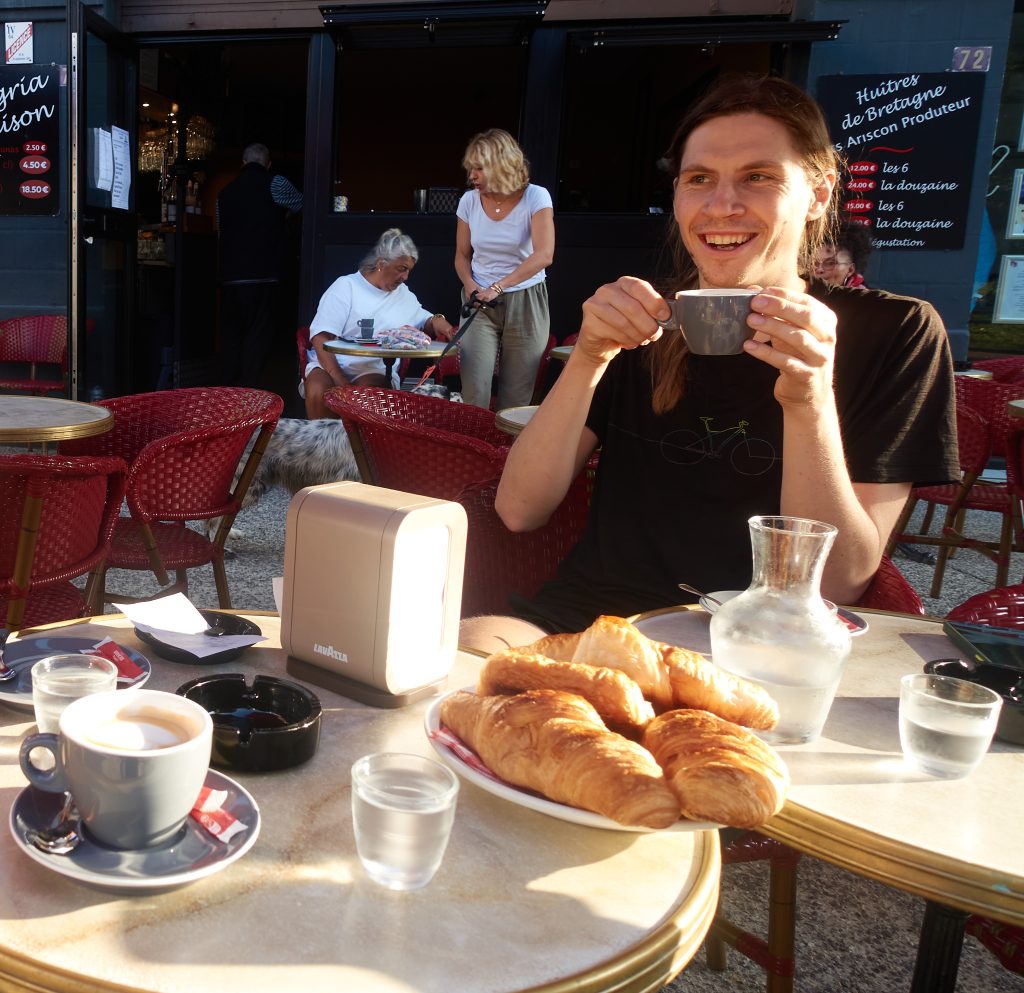
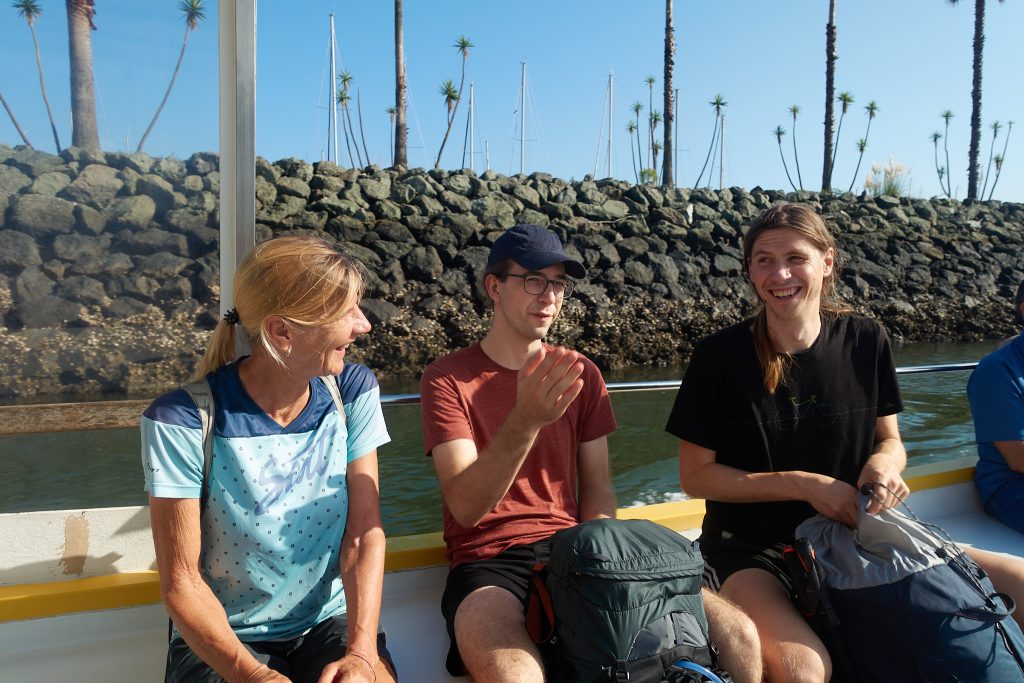
At Irun, we cross the border to Spain. The student at the supermarket checkout in Irun tells Astrid that he is doing an Erasmus semester in Aachen when he notices that she is from Germany, and asks if the university is good and where we live in Germany. We realise that we are in a new country, in a different culture.
At the campsite, the first stop on Lennart’s and Adrian’s hike along the GR11, we meet Adrian the 2nd’s namesake with his family and friends from Moldova and Ukraine. The lorry driver has been living in Spain for fifteen years. He heard our voices, asks where we come from, gives us a chilled bottle of white wine and we quickly get into an intense conversation about Germans, French people, Moldovans in Spain, politics, racism, families and so on and so forth…
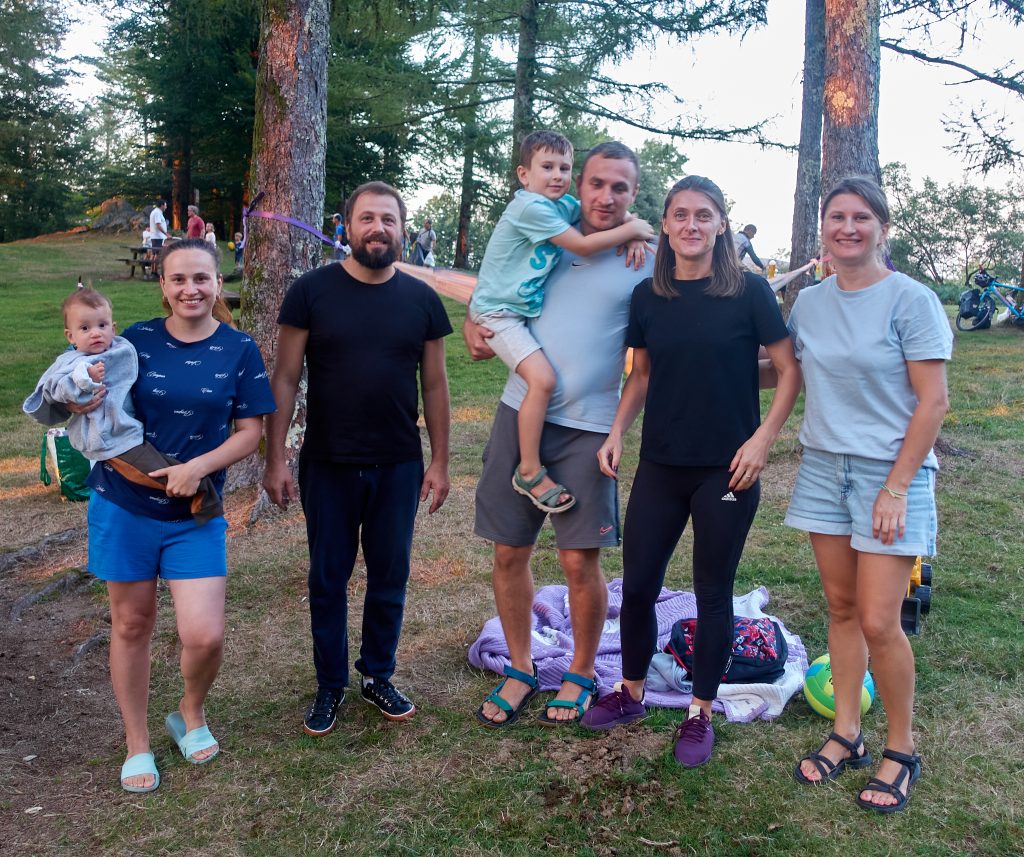
At some point, the picnic guests leave us and we remain among a few other campers and the animals, whose bells jingle all night long.
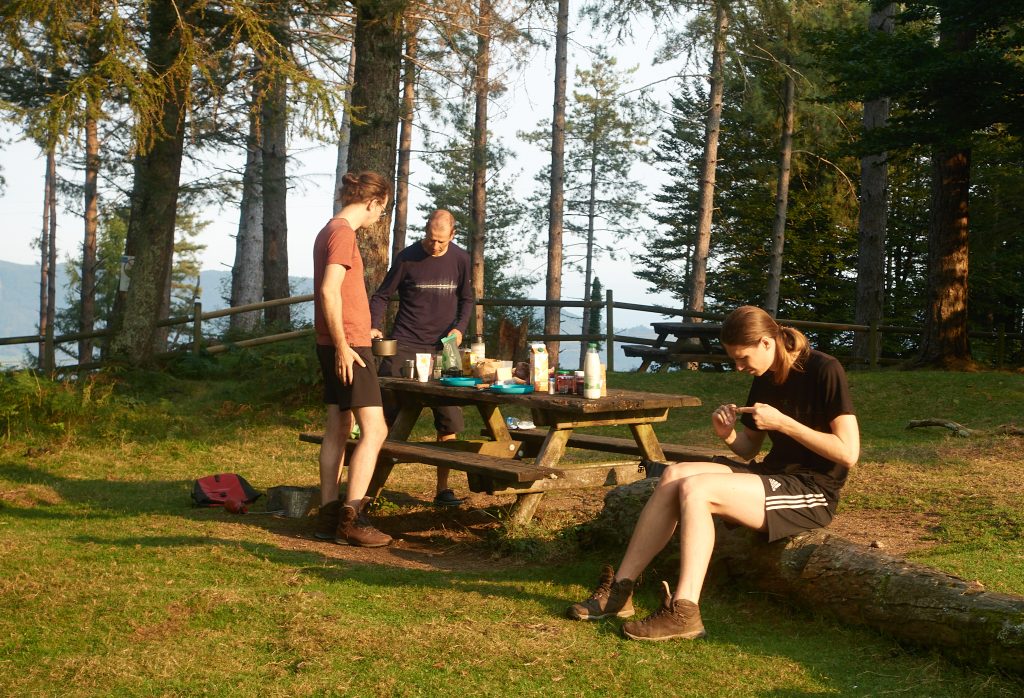
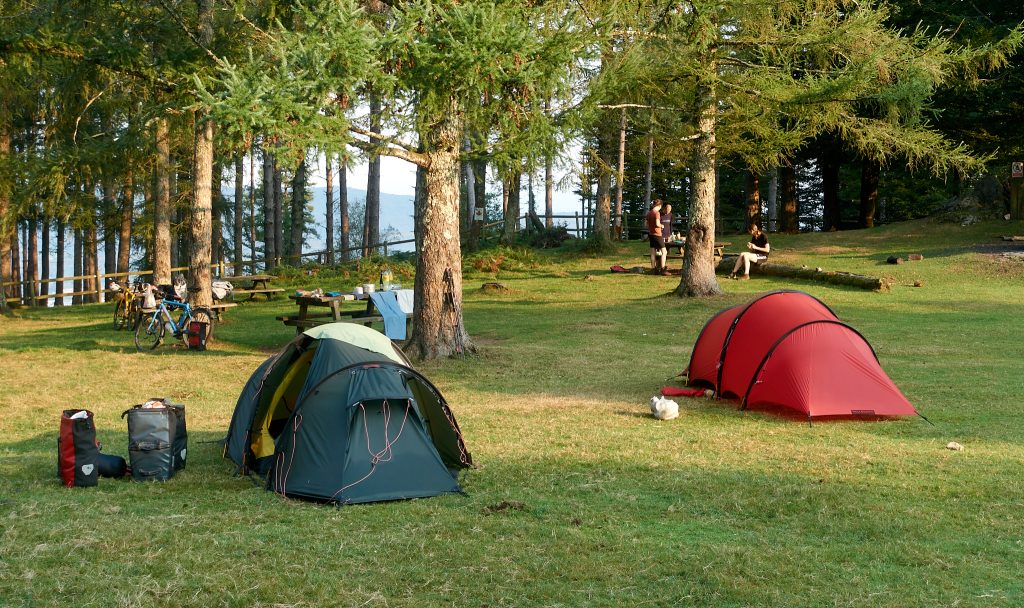
The next day, the lads head east and we cycle west.
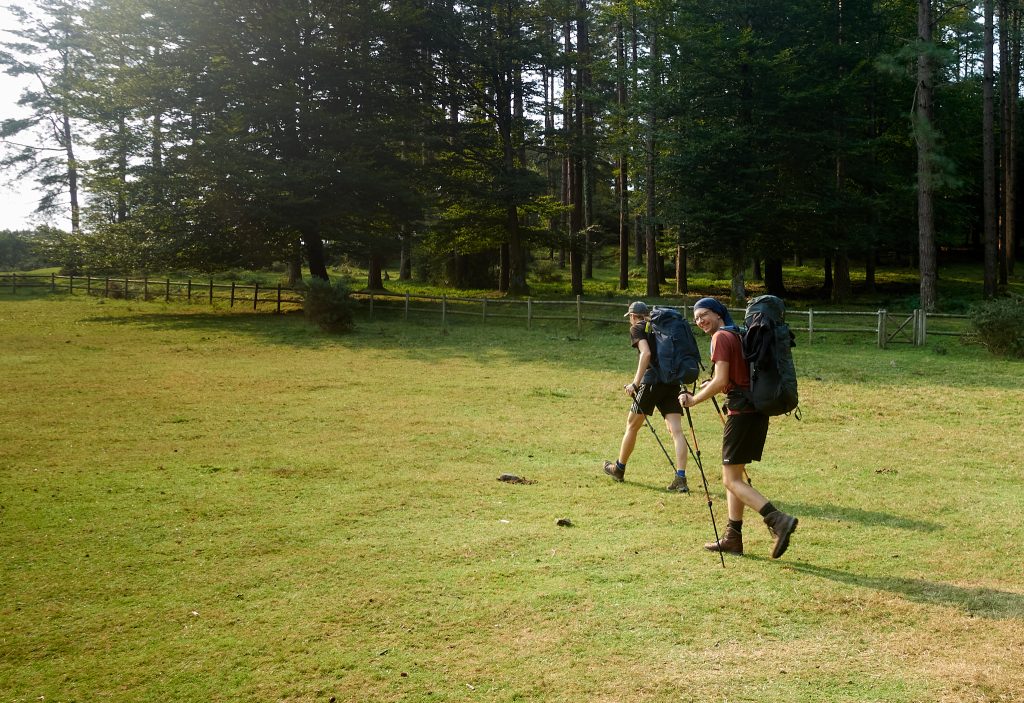
Culture tip: When we played the board game “El Grande” with the boys, we often played and sang along to the song “Boys in the Baskenland” by Fontaines D.C. The song is actually called “Boys in the Better Land” and it is a great song – be sure to give it a listen (loudly).
We explore the second most mountainous country in Europe after Switzerland.
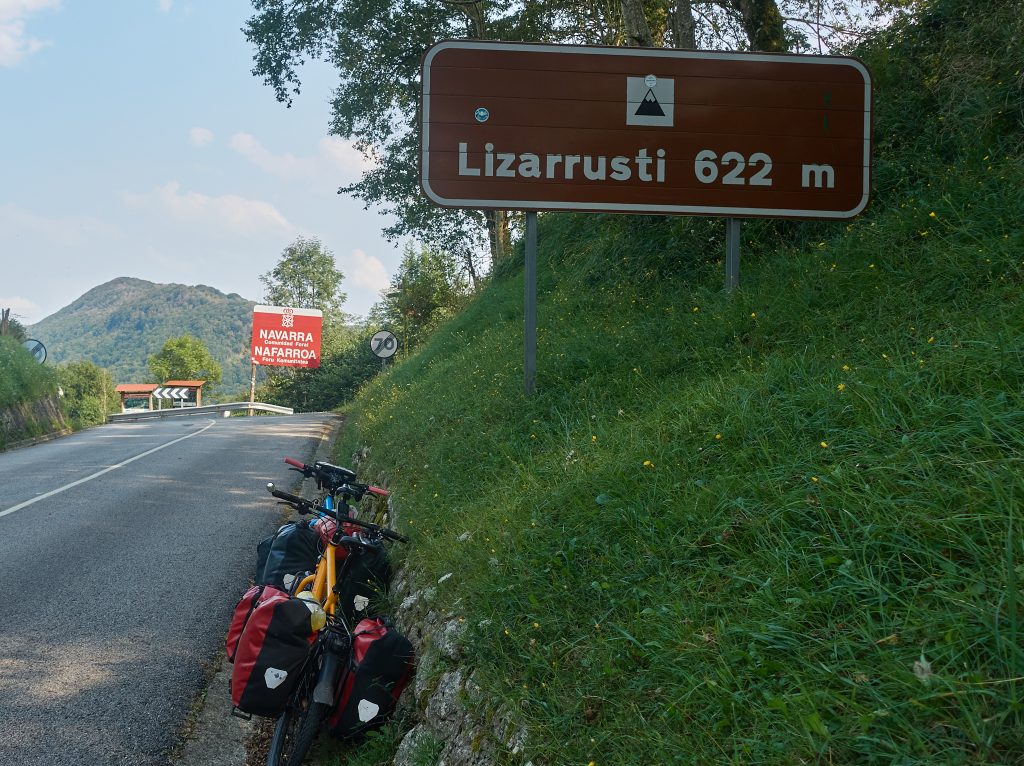
However, we also feel that we can be ourselves here. First, we get used to the southern European rhythm. Lunch is served until 12 noon. Breakfast and lunch merge into one another. The siesta begins at 2pm at the latest, and little happens before 5pm.
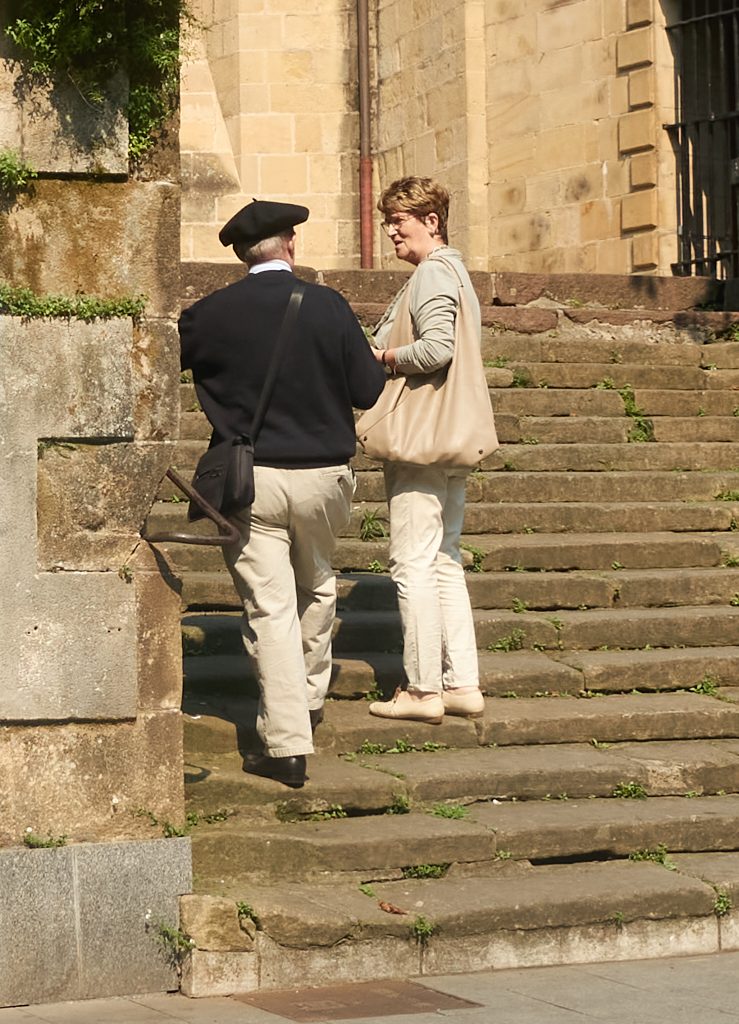
We stop at Camping Eco Arbizu: ‘Find yourselves a spot’. It is Sunday evening. Some guests are dancing, others are playing games, some are sitting in the bar, and others are barbecuing. A group of ten female footballers camp here. Those who like to walk around topless do so. Someone else is skilfully juggling a ball with their feet and legs, while others are cooking.
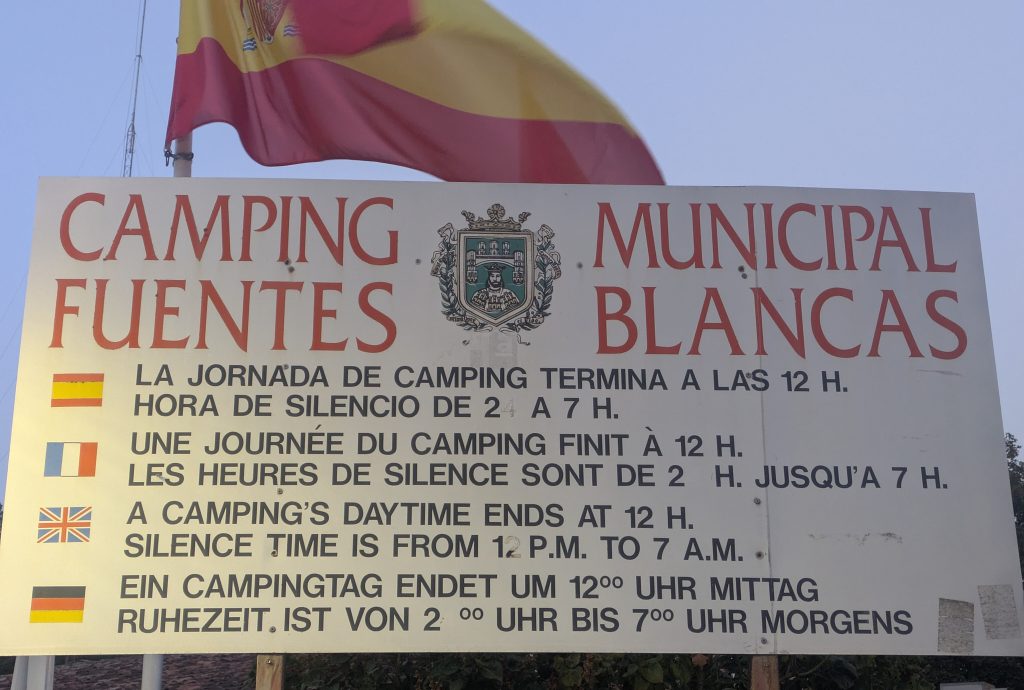
Today we are heading for Vitoria-Gasteiz, the capital of the Basque Country, and then on to Camping El Roble Verde in the middle of nowhere. Very nice! Swimming pool, bar, restaurant, small shop, free choice of pitches. Next to us is a family with two children in nappies and a small camper van. They are eating later, so they lend us their table when we start cooking at around 9 pm. The playground is open until 11 pm and the children take advantage of this.
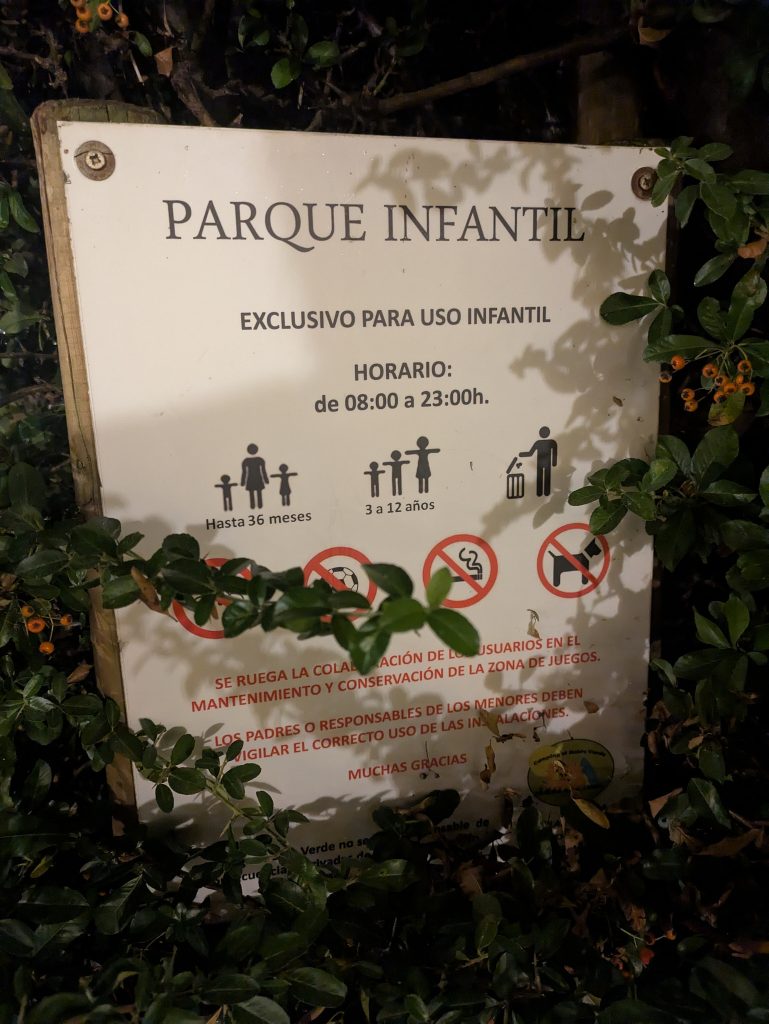
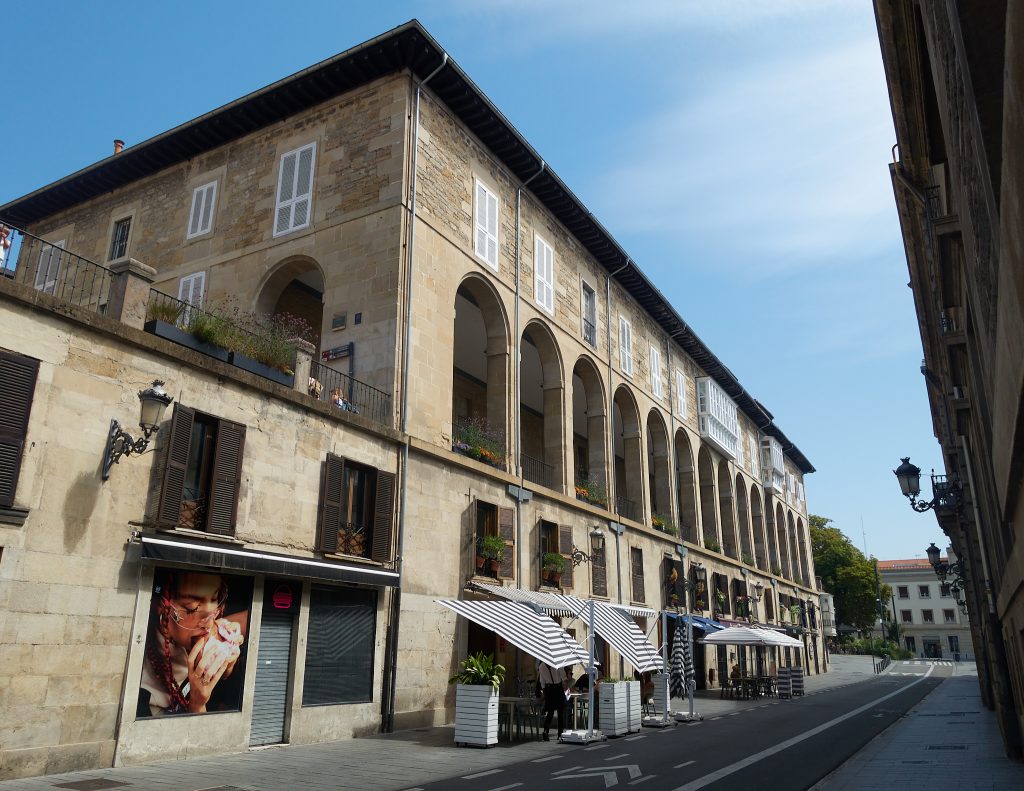
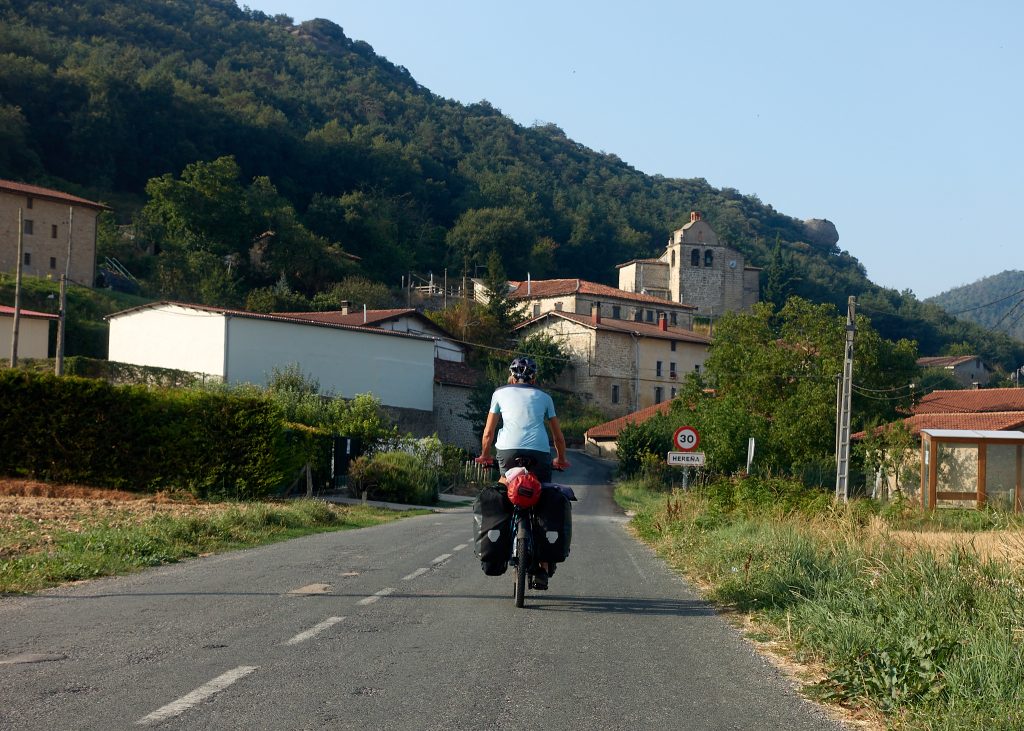
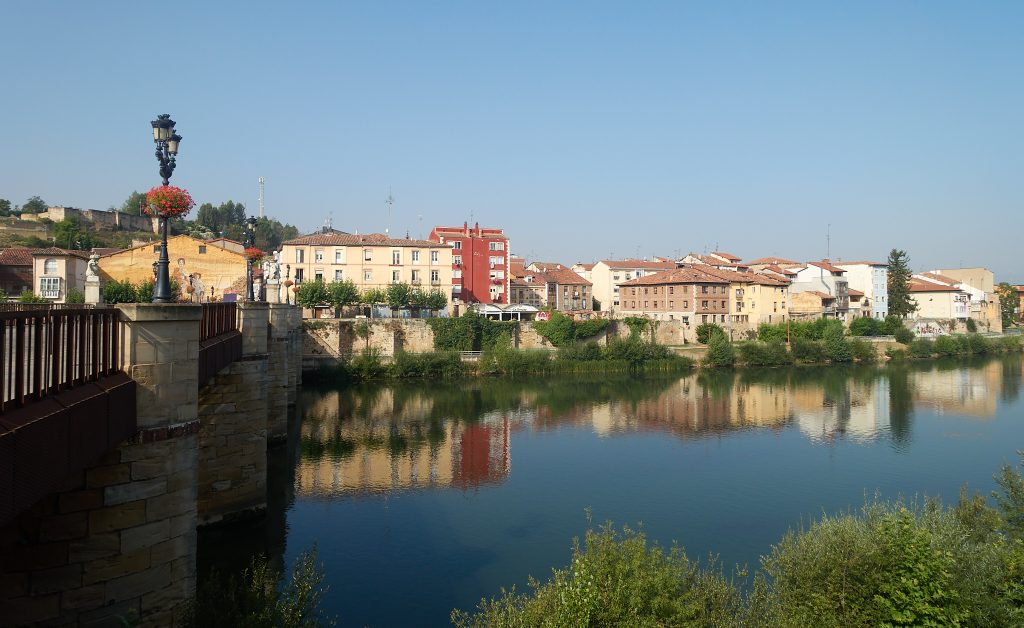
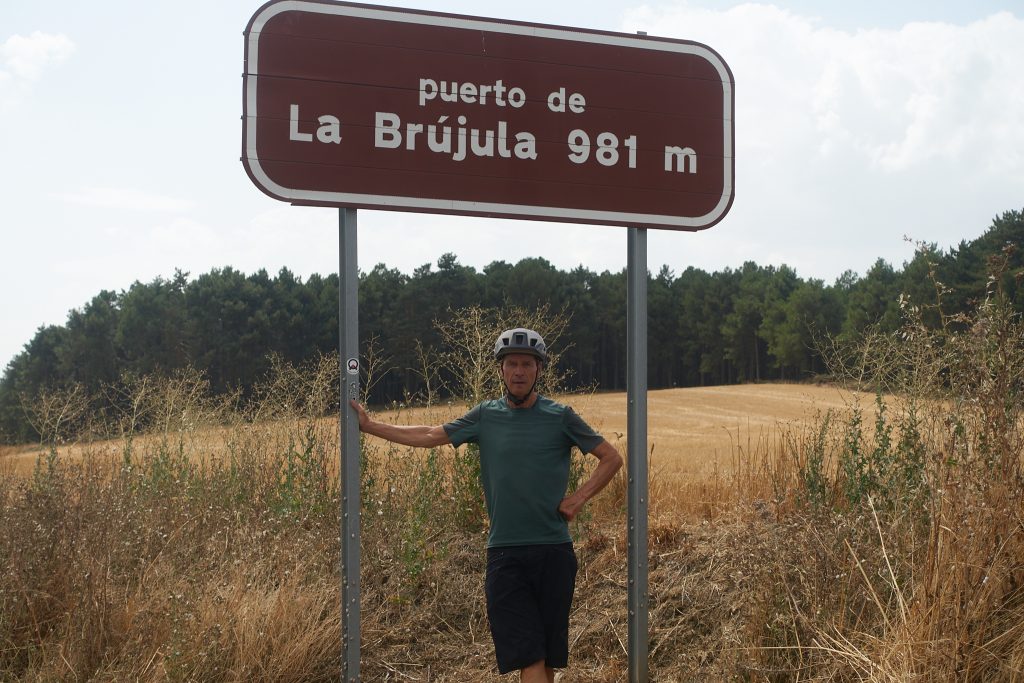
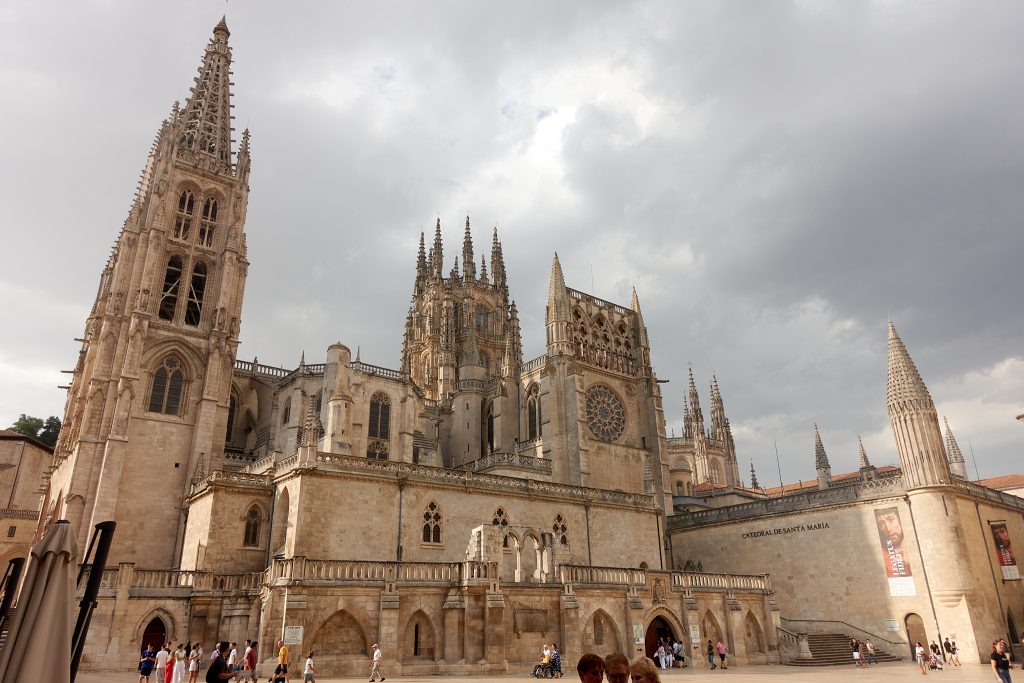
After a day on the well-paved, quiet National Road 1, we stop at the **** Stadtcaming in Burgos. Time for a stroll through the city to the cathedral, a World Heritage Site. We eat in one of the numerous tapas bars. So many people, old and young, are outside enjoying the balmy evening. What a zest for life!
Now the Way of St. James has us in its grip. On dusty gravel roads and streets glistening in the sun, we make our way towards Santiago with pilgrims. Apart from harvested grain fields and the occasional sunflower field, there is not much here. The desert-like places seem deserted. We do not know whether the hostels advertised will take in pilgrims. Perhaps they are closed during siesta, or perhaps they have been closed for years. The pilgrims are four times slower than us. Long-distance hiking is not for us.
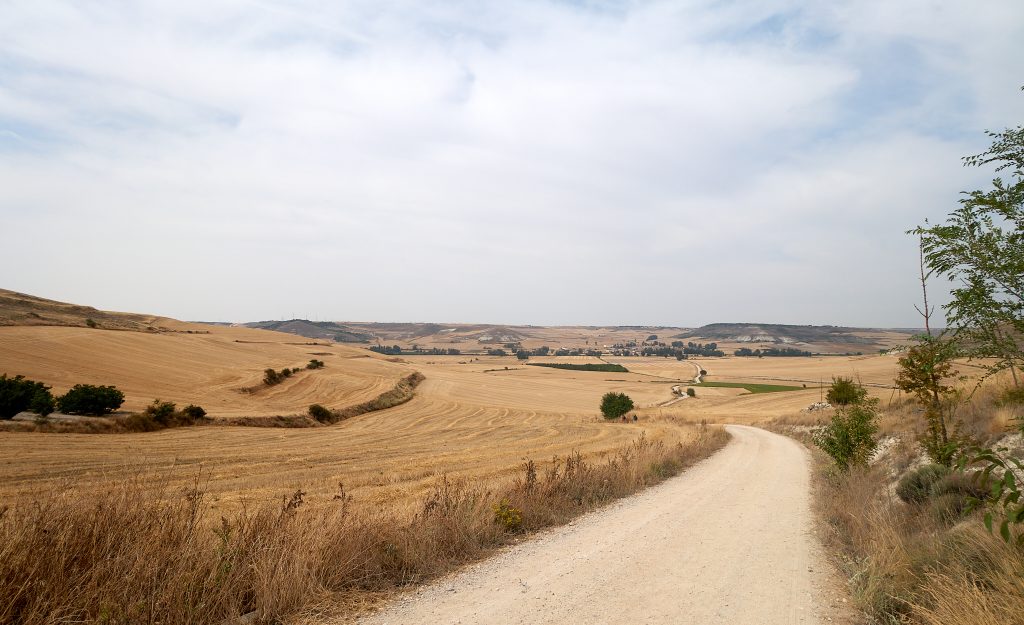
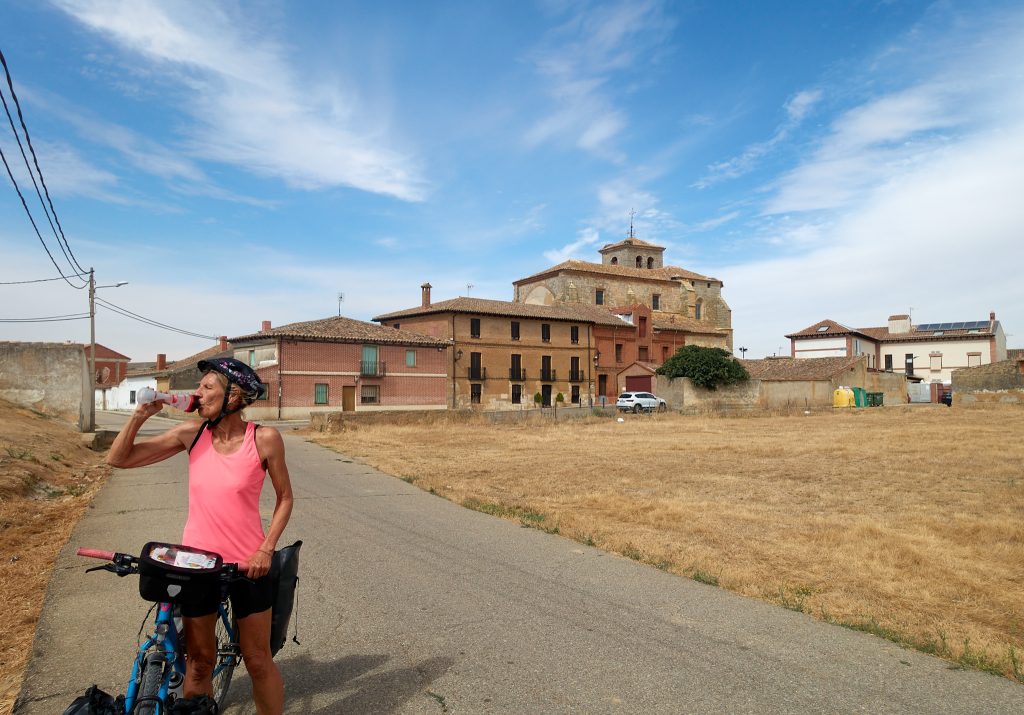
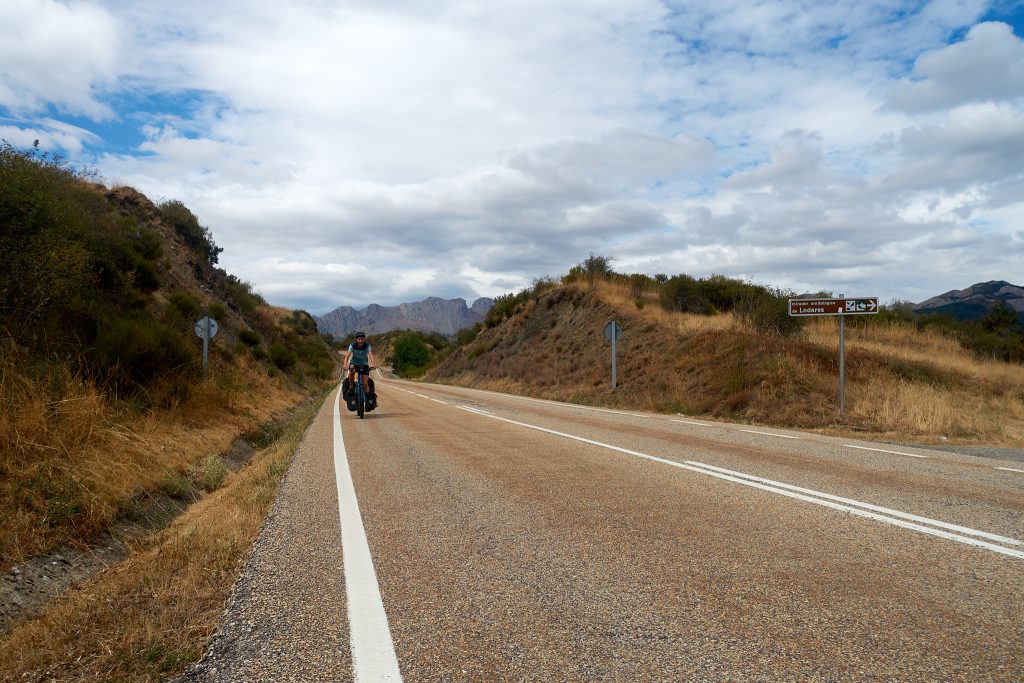
We decide to leave the path of penance and turn north towards the mountains the next morning. Immediately, the landscape becomes more charming and green, with cornfields appearing and the Cantabrian Mountains in the background. The strong headwind remains. We cycle along undulating terrain at an altitude of around 1,000 metres.
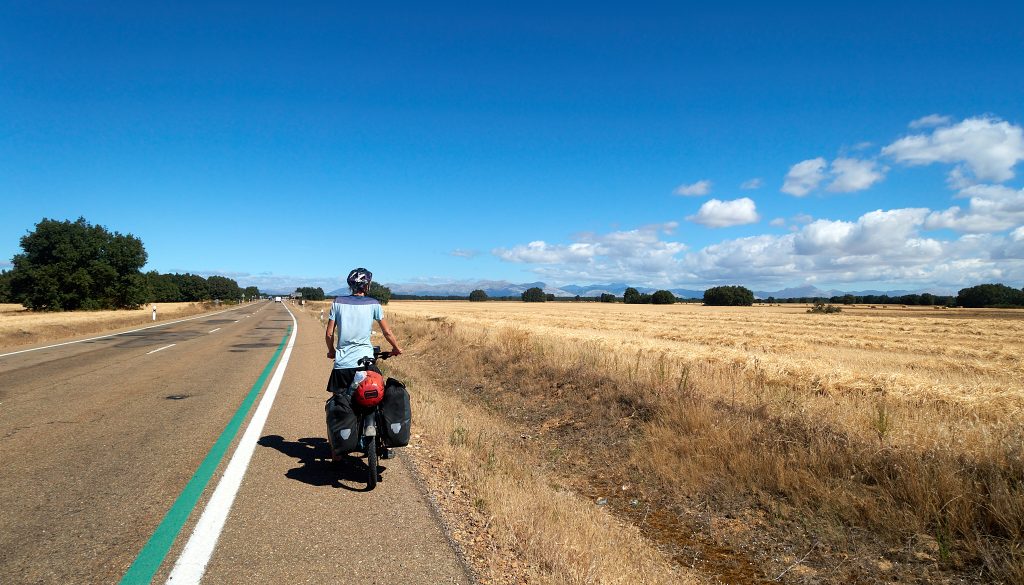
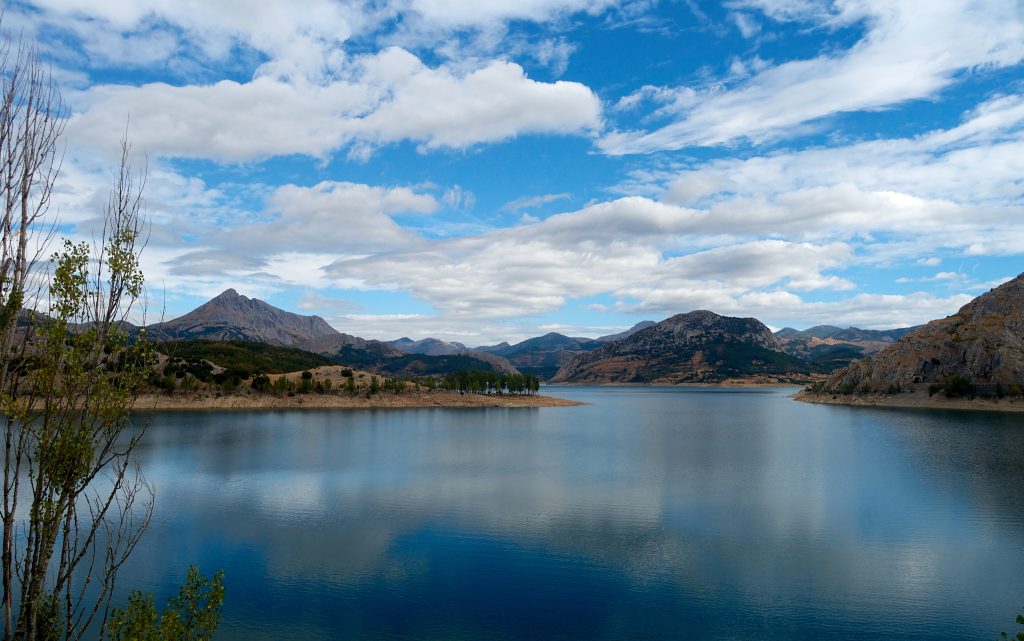
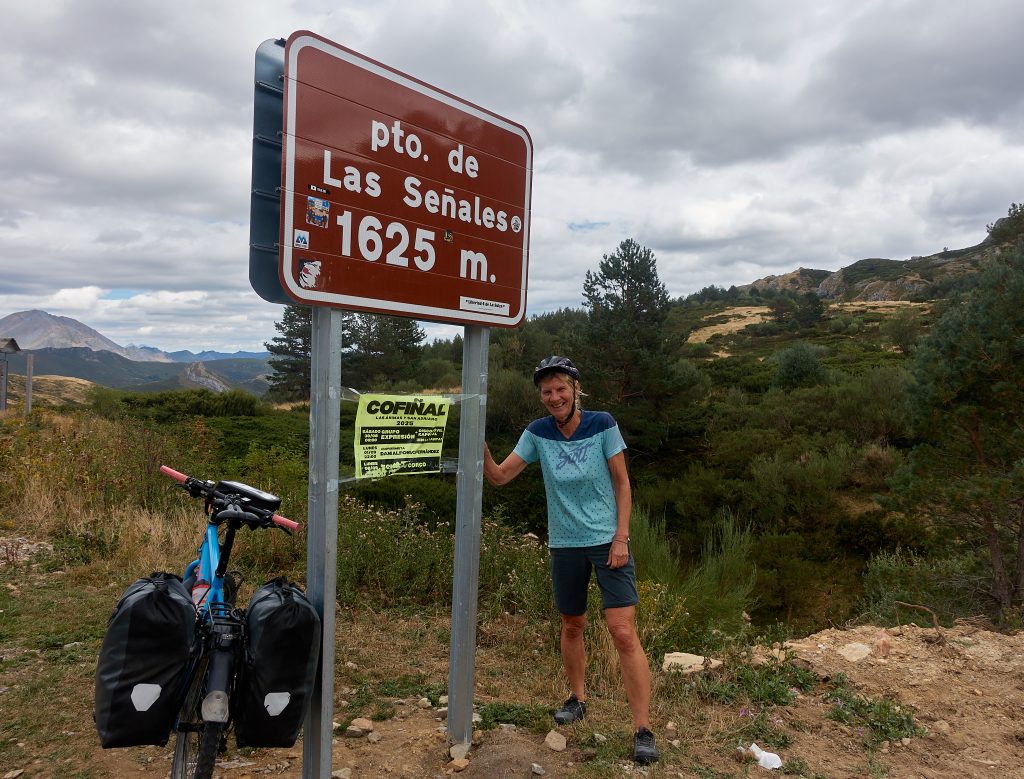
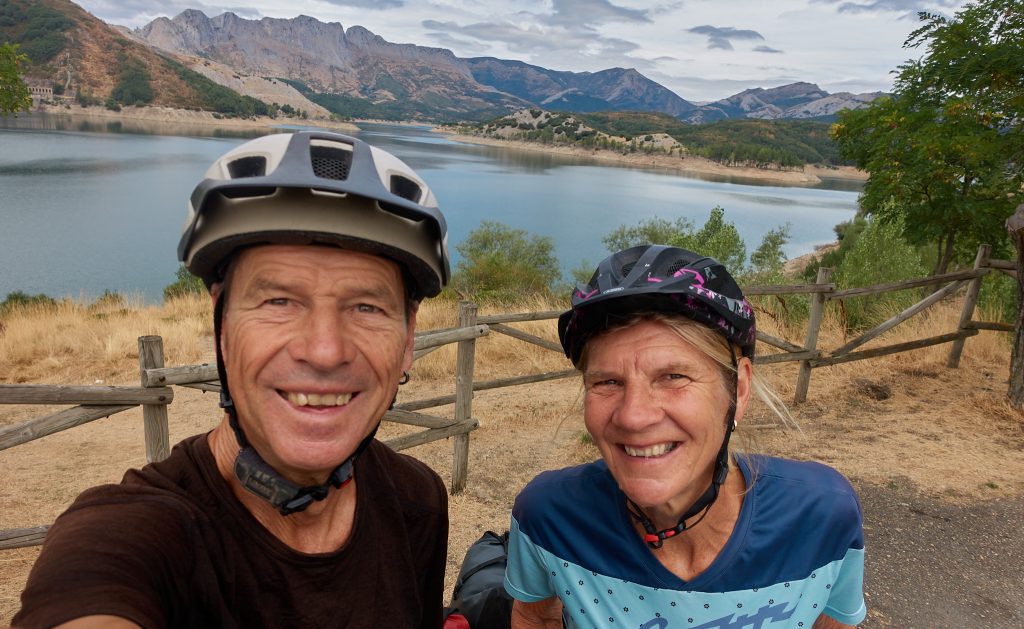
Overnight stay in Cistierna and the last stage of this week becomes the queen stage. We continue north across the Cantabrian Mountains towards the Atlantic coast, the western massif of the Picos de Europa: El Cornion, Spain’s most beautiful mountain range and oldest national park (1918). The landscape is magnificent, with a huge reservoir between the mountains. The temperatures are ideal, the air is incredibly clear and there are usually a few clouds in front of the sun. The ascents and descents are moderate. We enjoy it. Our destination is Sobrescobio, a municipality with 800 inhabitants in eight small, very quaint, inviting villages with bars, small shops, a lively town centre and a brand new campsite. The bells of grazing animals ring on the mountain slopes and, before we enter the campsite, a huge bull makes an appearance. (The farmer brings him out again a little later. :-))