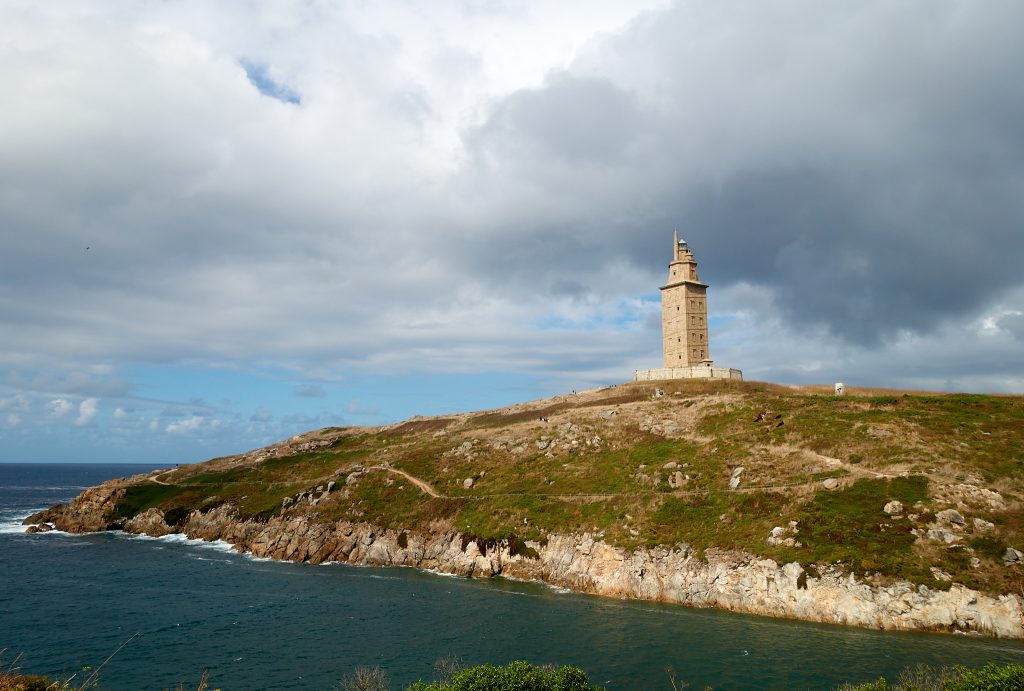
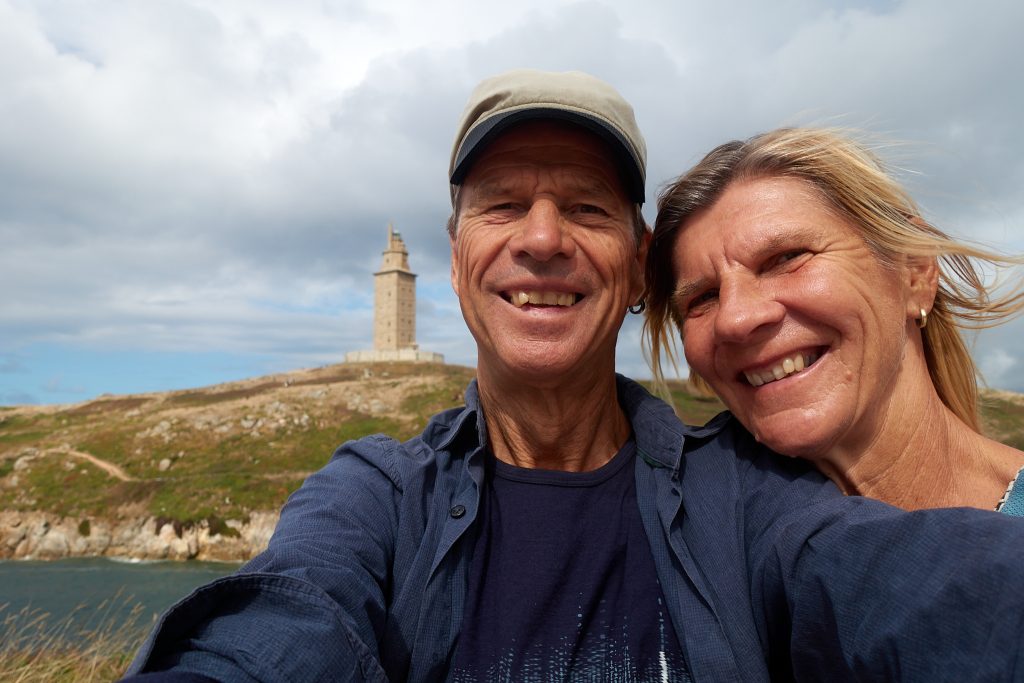
… is located in A Coruña and is the oldest functioning lighthouse in the world (built in the 2nd century). Pablo Picasso, who spent part of his childhood in A Coruña and painted the square Roman tower several times, called it the caramel tower. Its actual name is Torre de Hércules. In 61 BC, Julius Caesar left the Roman Empire and landed here. So much ancient history, deep in the west of Europe!
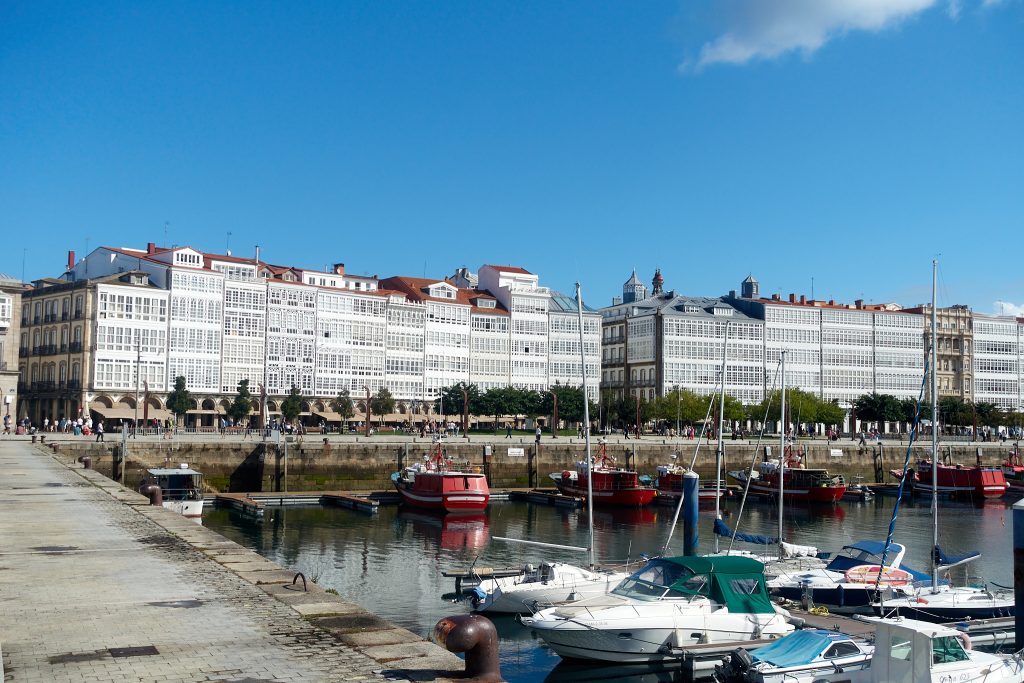
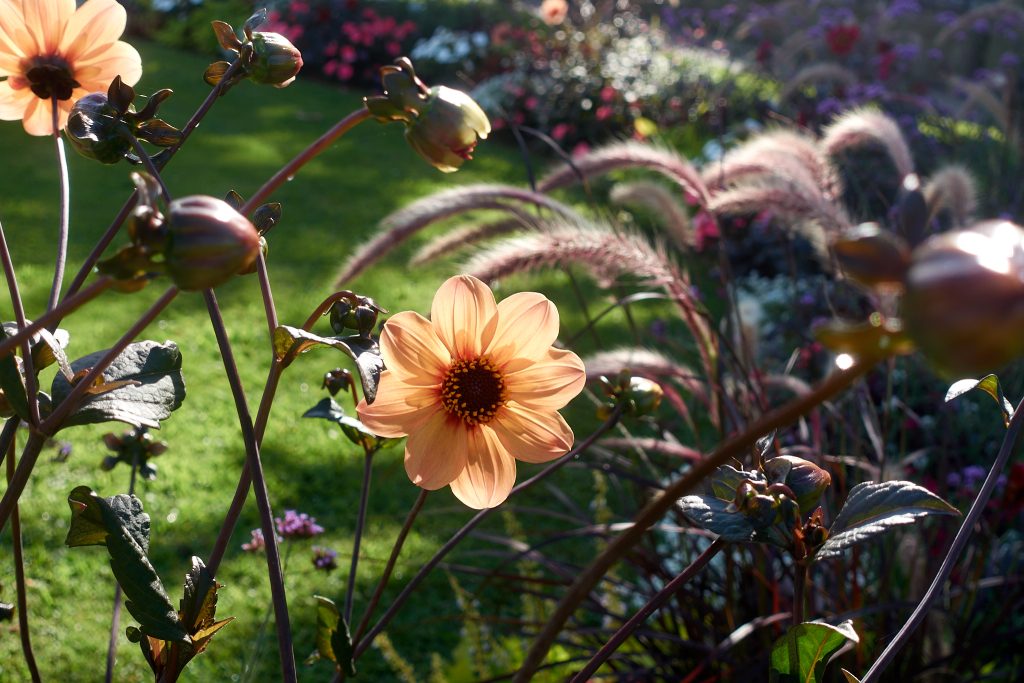
A Coruña is a lively port city with 250,000 inhabitants, which we visit on a Sunday. Many people are out and about, in the bars, in the harbour, in the old town, in the green parks with pretty flower beds.
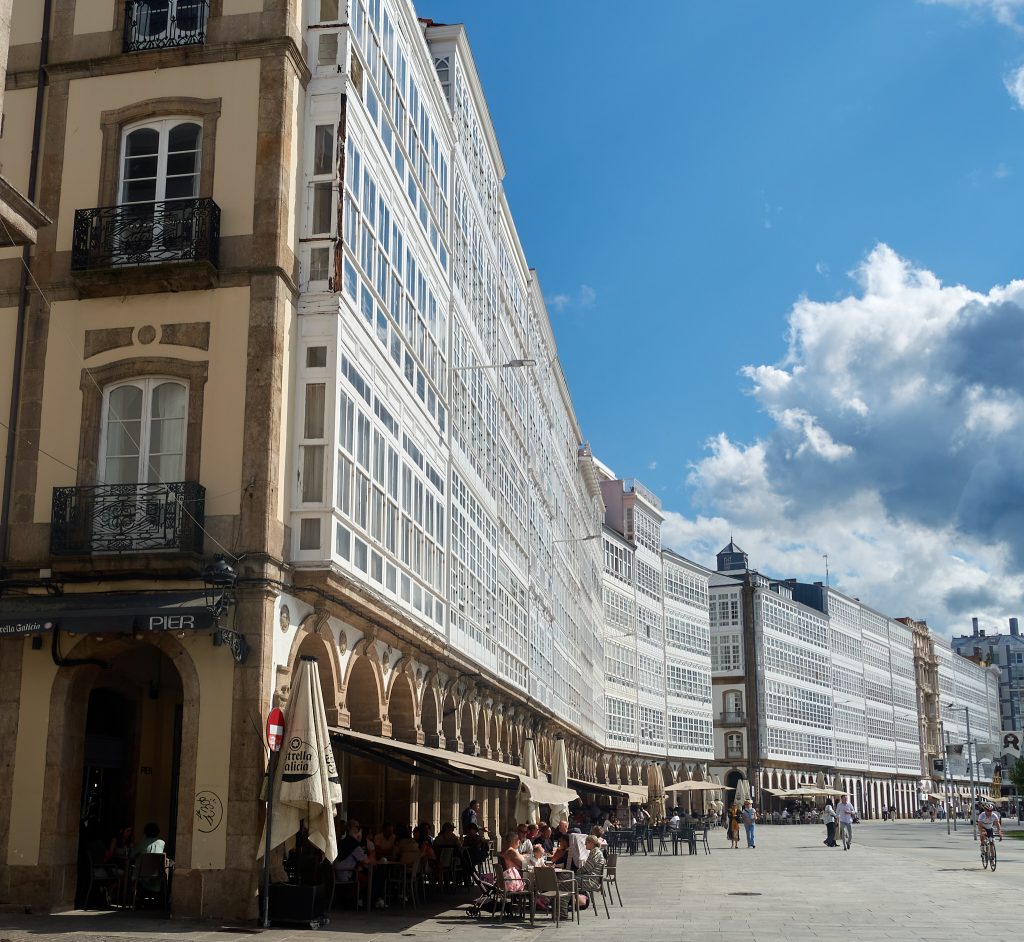
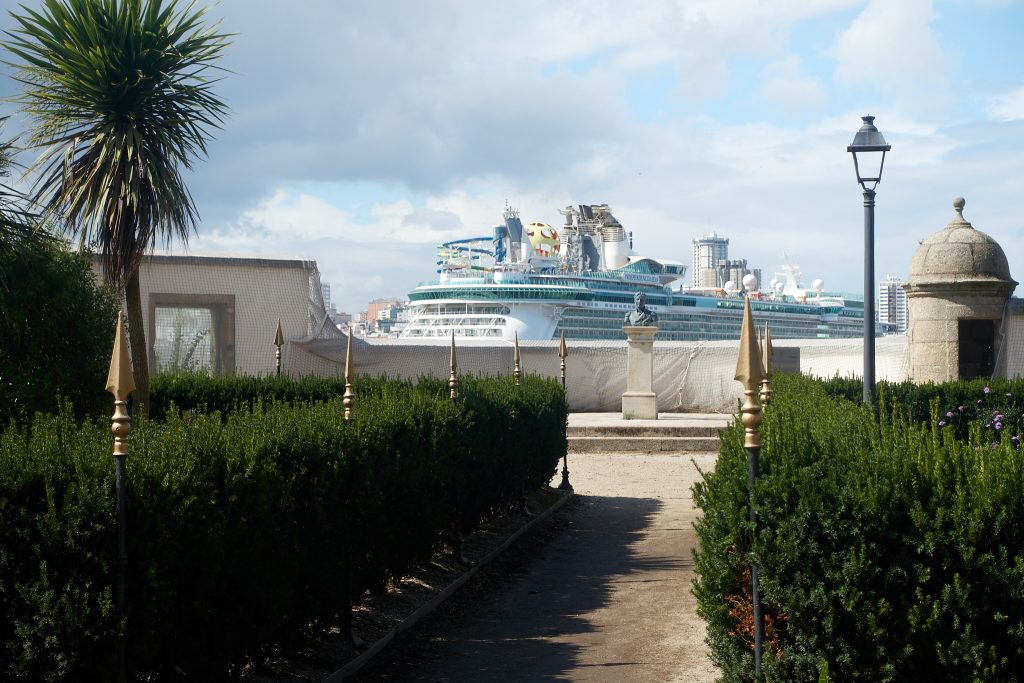
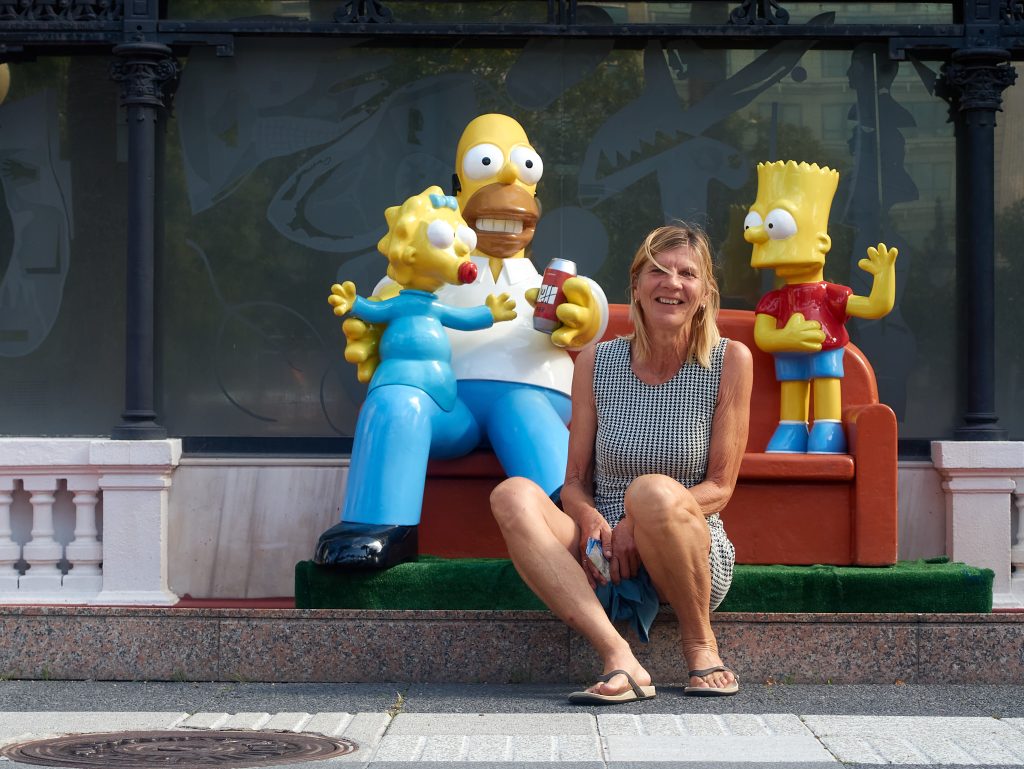
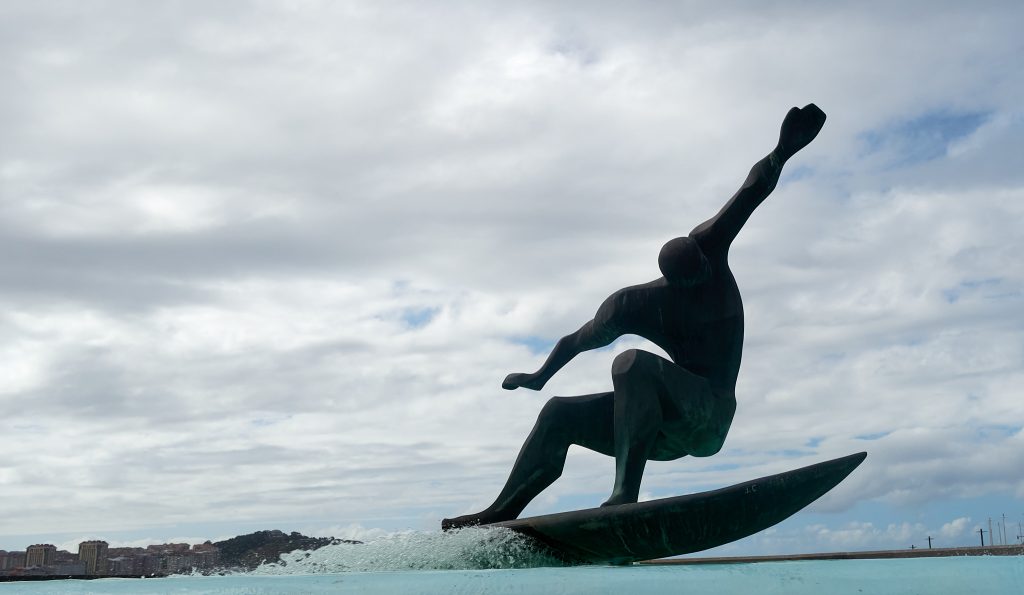
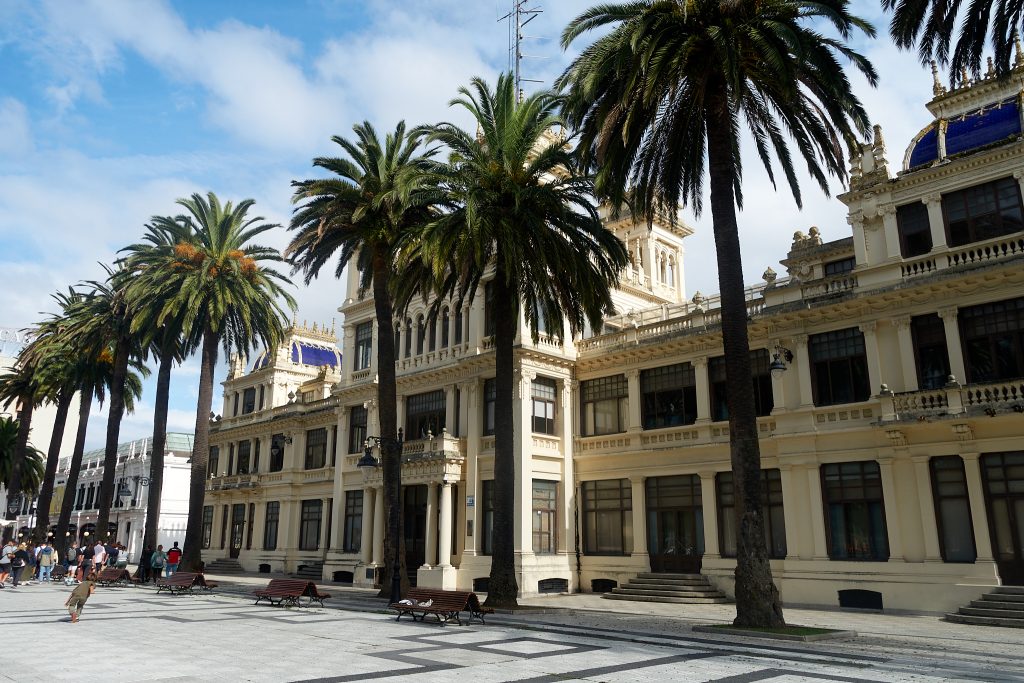
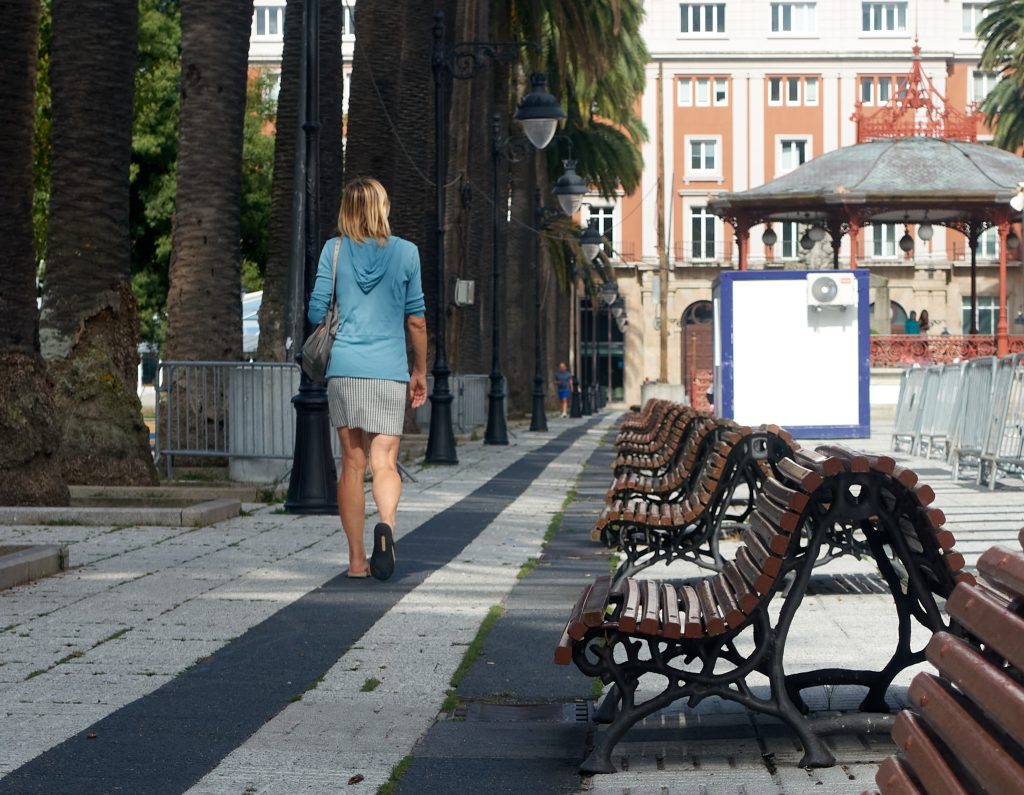
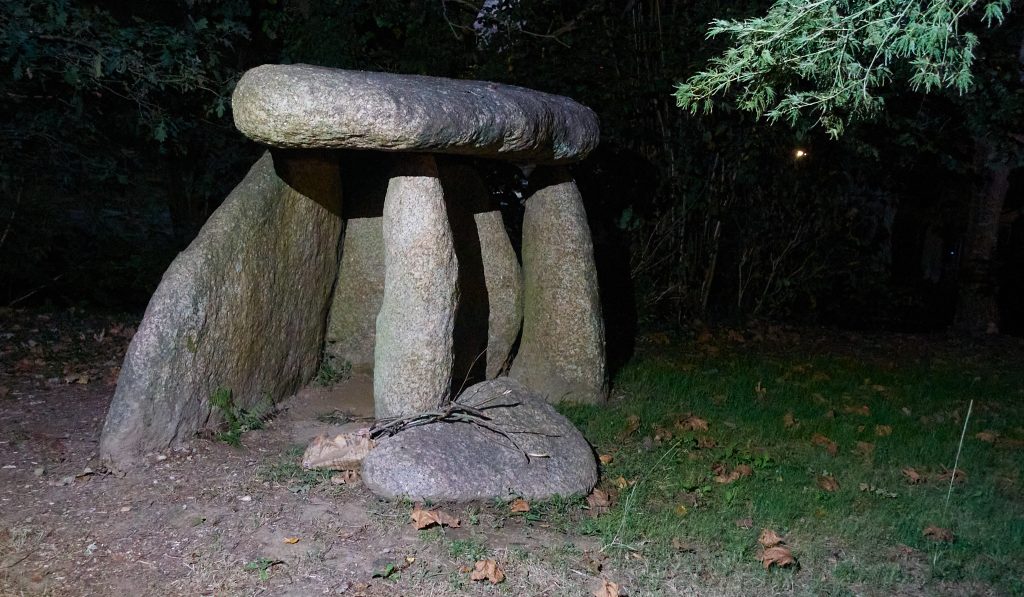
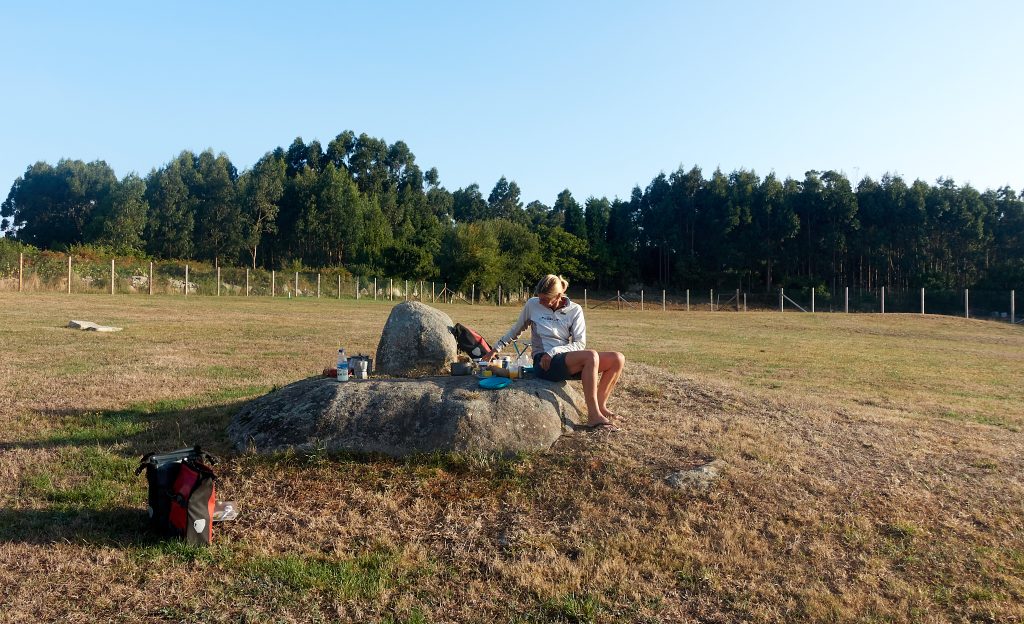
From our campsite in the small coastal town of Santa Cruz, located in a park with dolmens and numerous art objects, we take the bus to A Coruña.
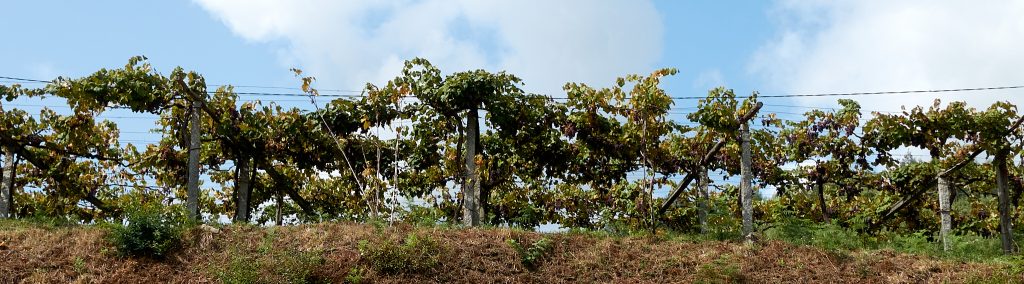
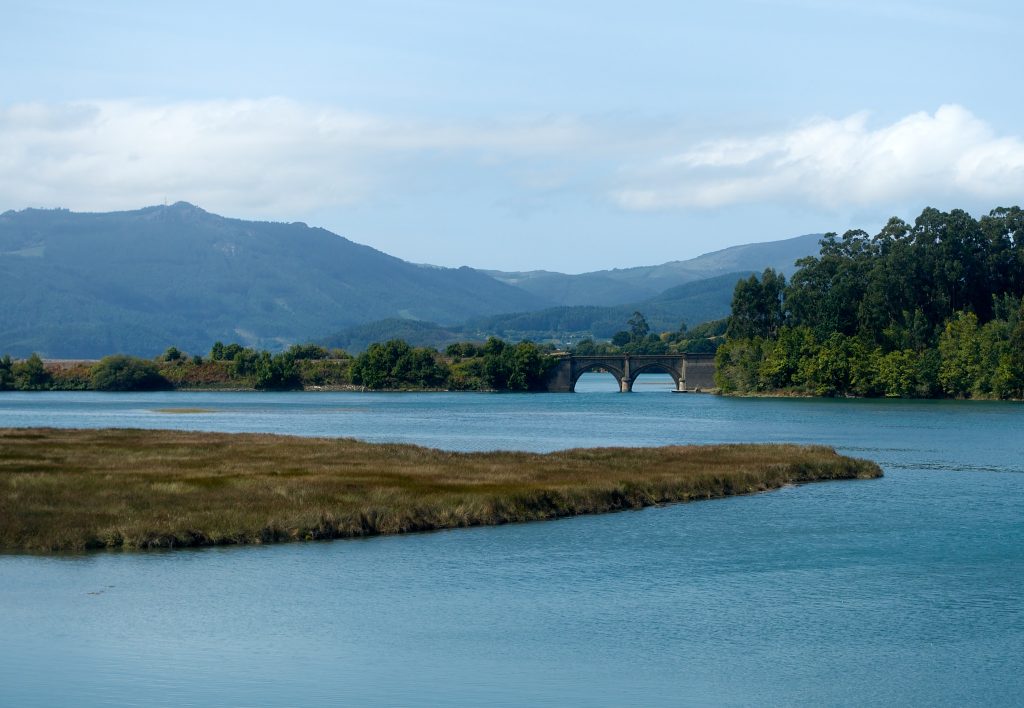
Galicia is stunning, with so much nature, plants that bloom all year round, lemon and peach trees.
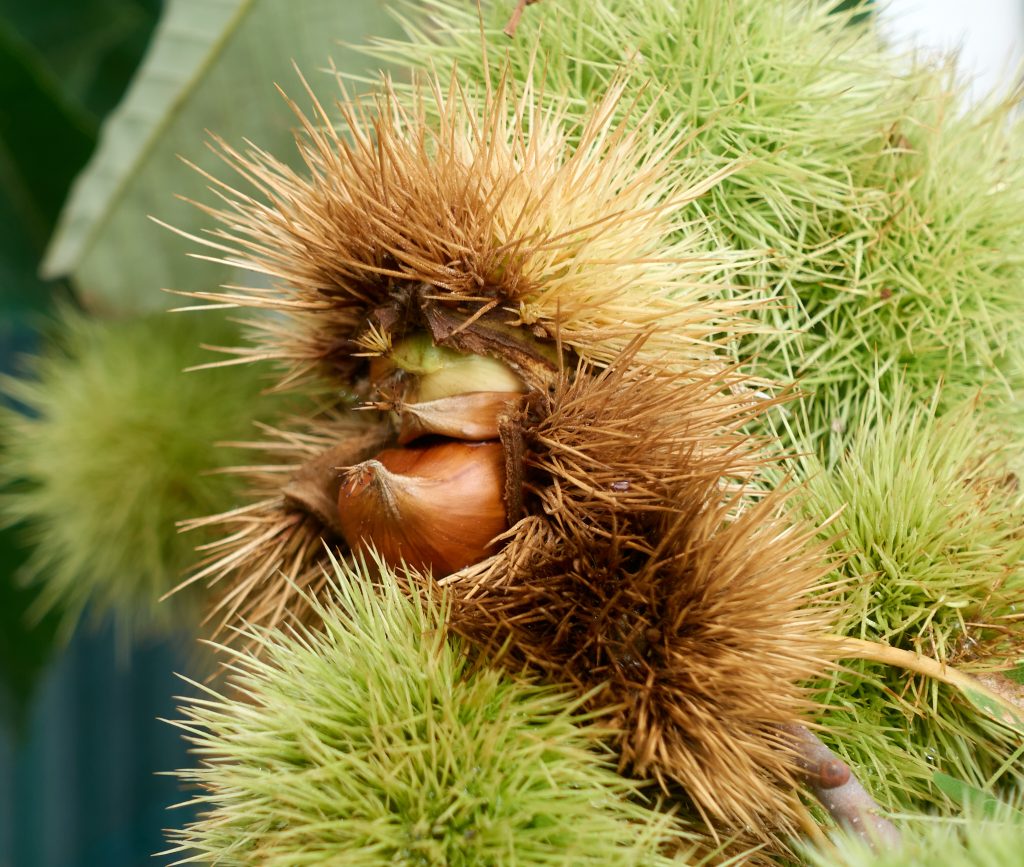
We cycle through extensive eucalyptus forests. Perhaps they were planted to replace areas of forest that had been burned down. Perhaps the Galicians also want to get into the production of eucalyptus sweets. In any case, our bronchial tubes are always clear.
We meet friendly, open people in Galicia. They always have time to ask where we come from and where we are going.
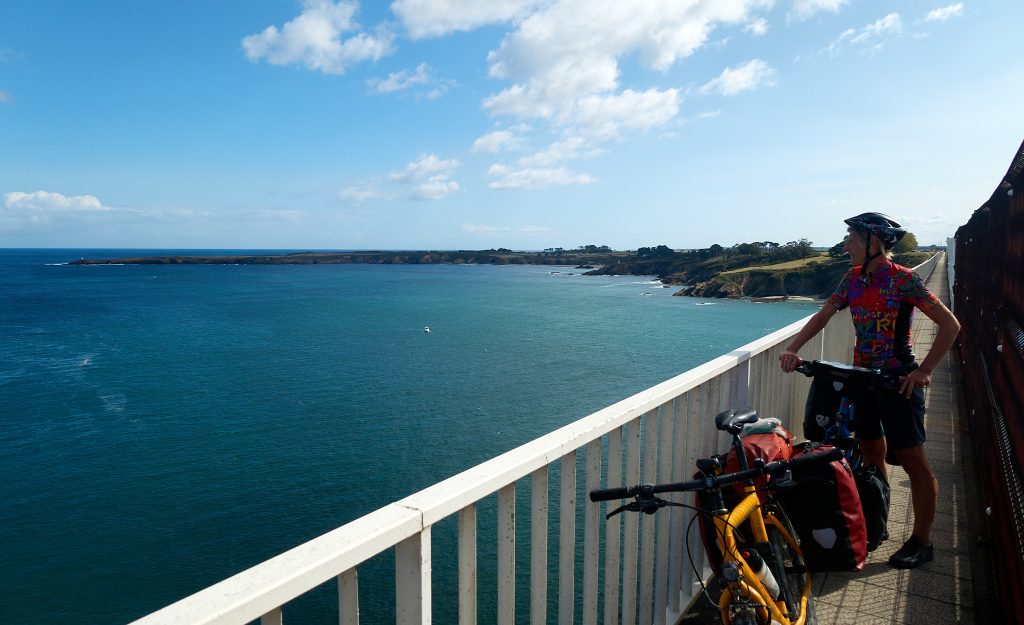
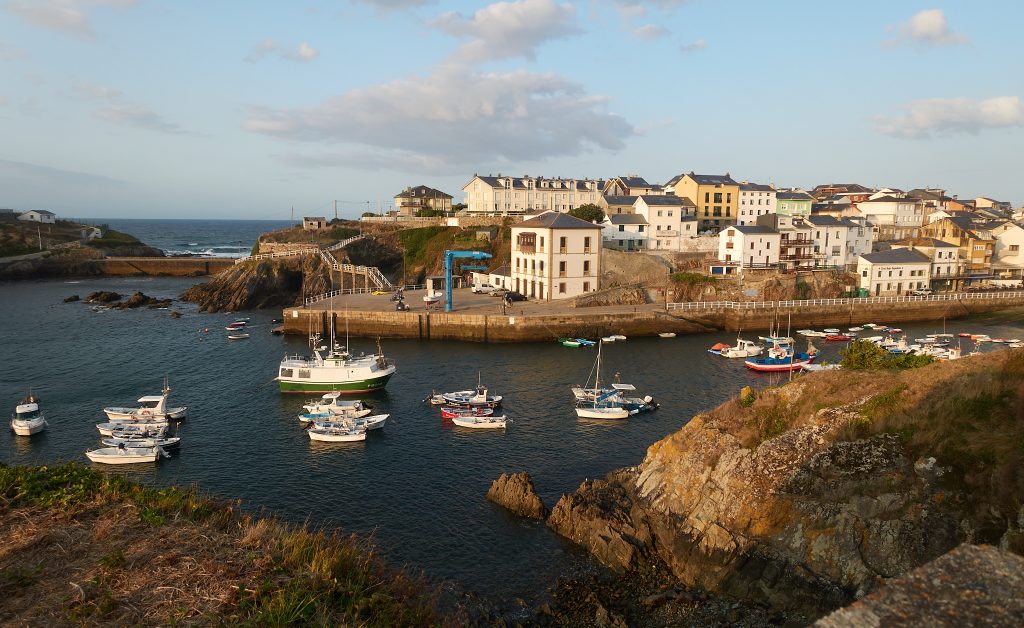
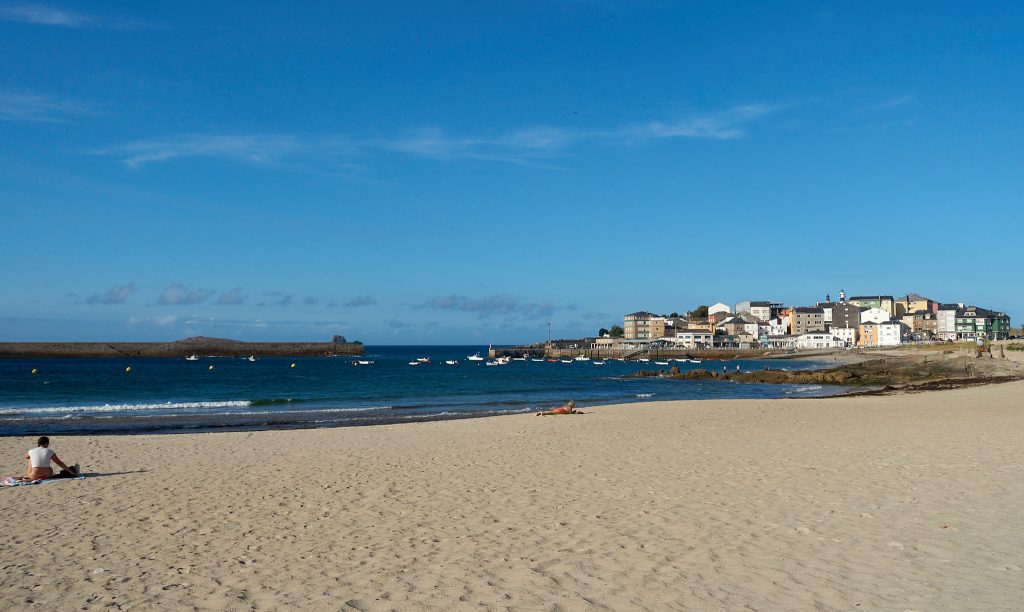
Great little harbour towns, such as San Cibrao on the north coast.
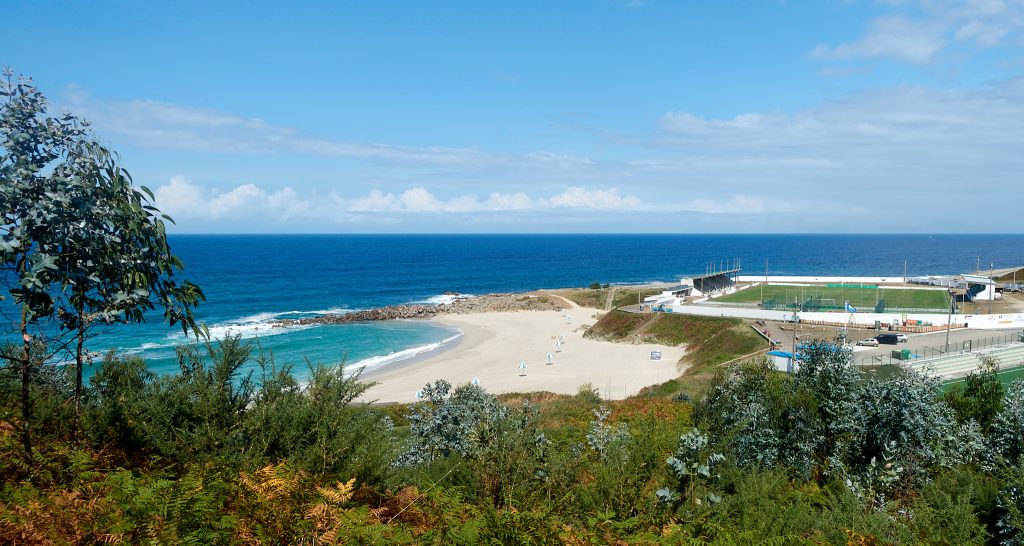
Deep in the west, the sun rises late: we don’t crawl out of our tent before half past nine. It doesn’t get dark before half past nine in the evening. Galician is spoken in Galicia. Galician is a bit like Portuguese and a bit like Spanish. Galicia is not bilingual, but primarily Galician. In Galicia, beer is not called cerveza, but Estrella Galizia, founded in 1906, 100 per cent family-owned and with a 100 per cent market share.
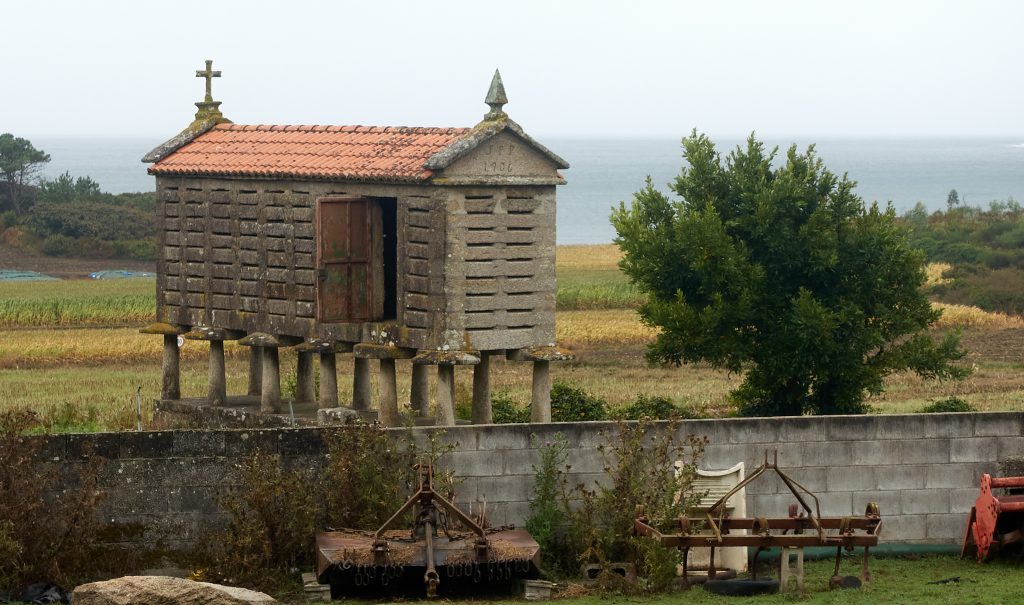
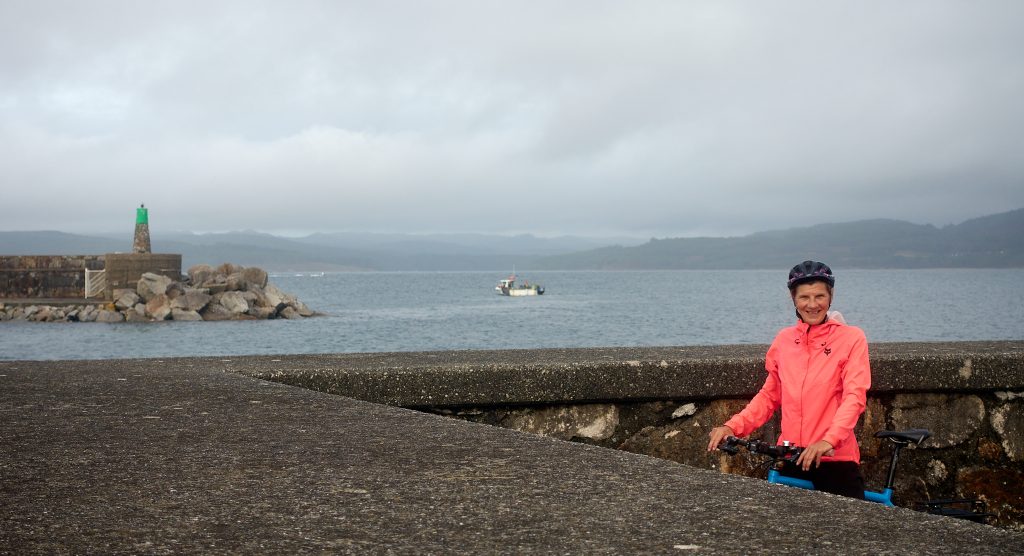
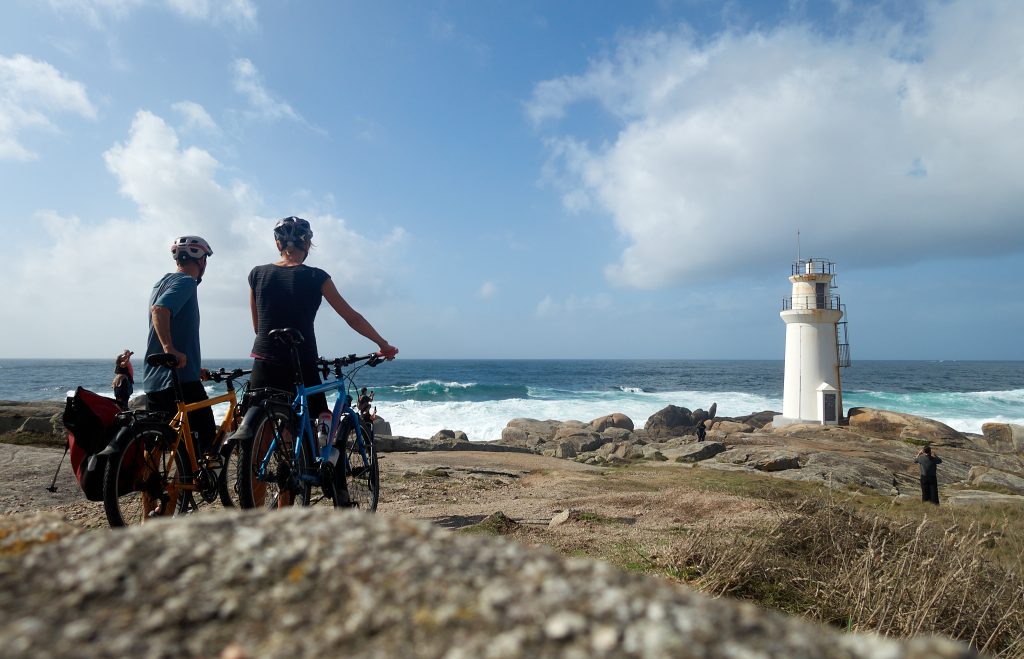
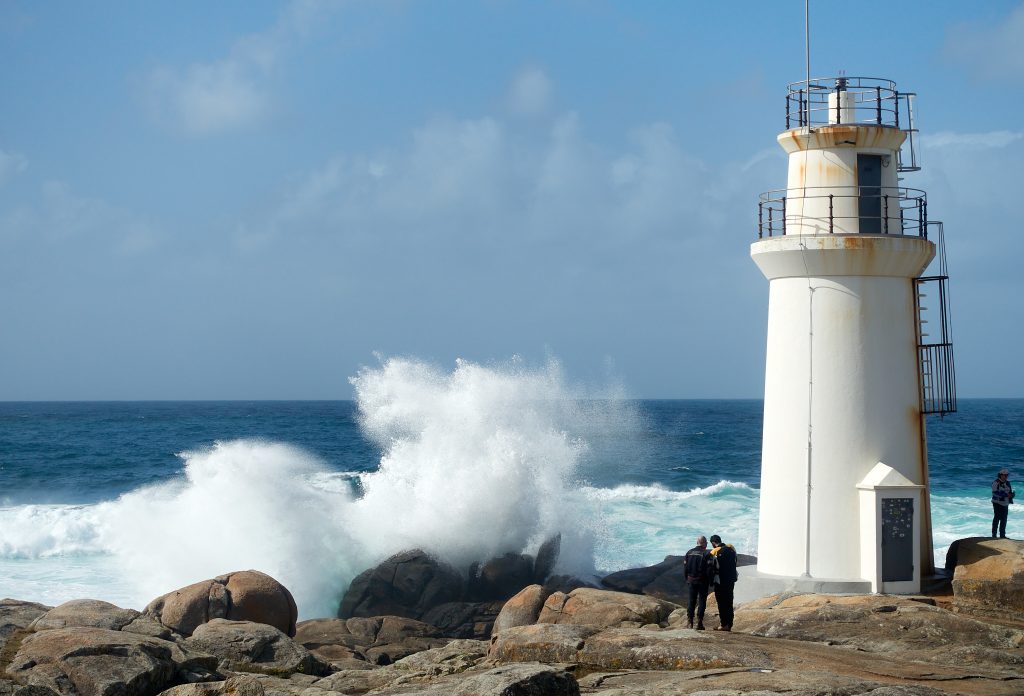
We discover the Costa da Morte, the Coast of Death. South of A Coruña, stretching 200 kilometres to Finisterre, beautiful, wild and not dangerous. The coast gets its name from the many shipwrecks that lie off it.
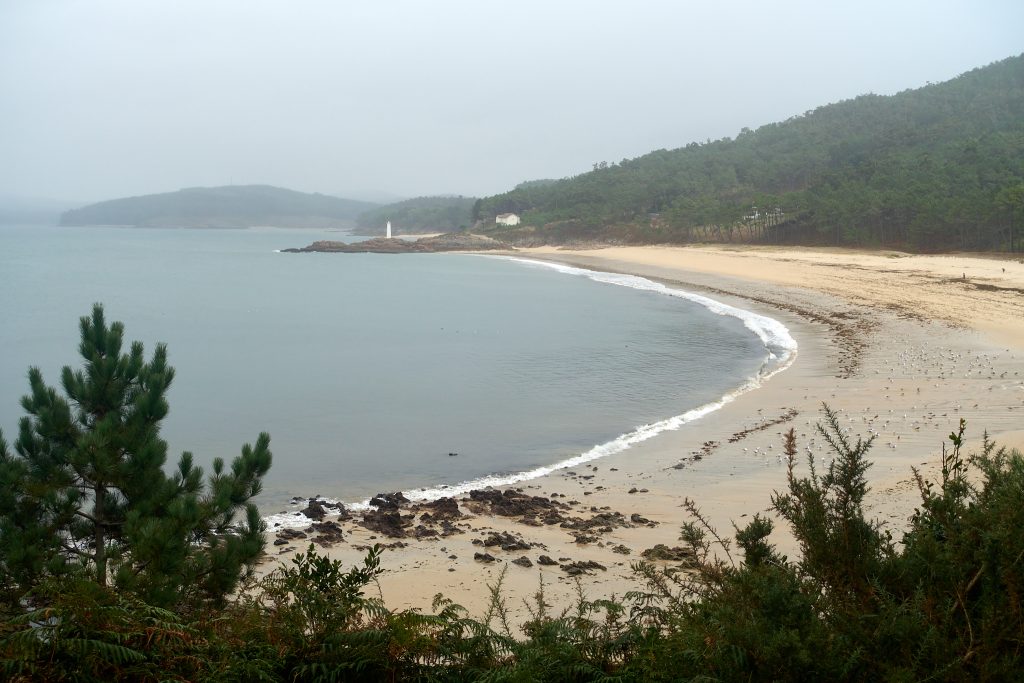
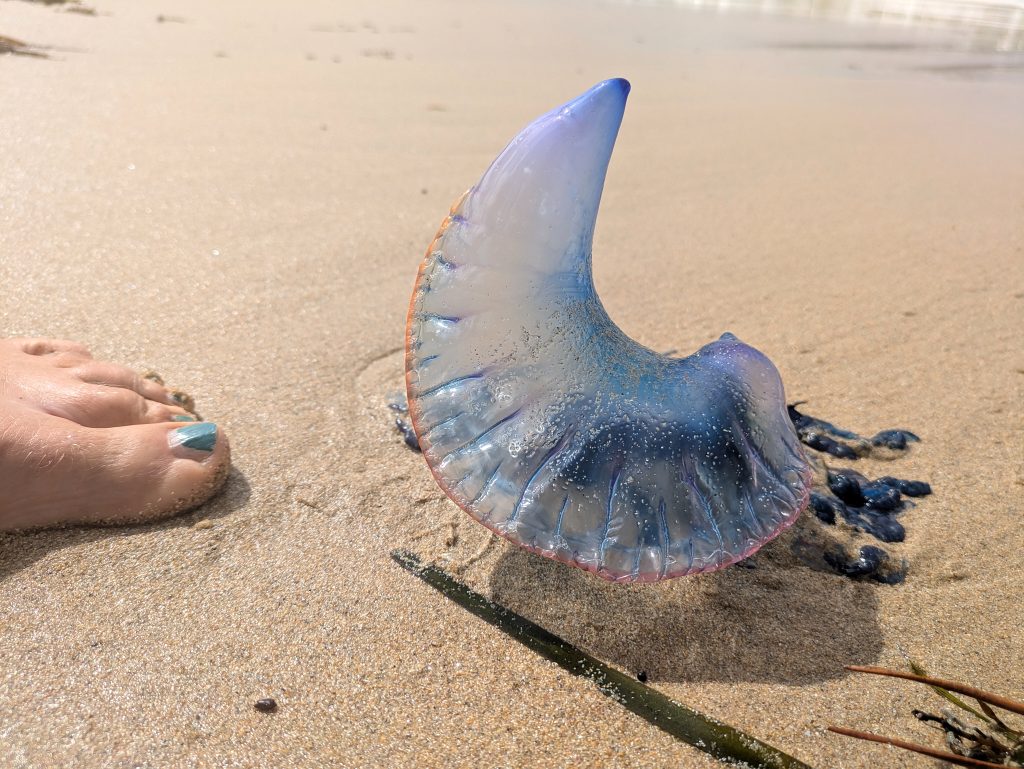
The search for a place to stay takes us to Santiago de Compostela. Santiago is the capital of Galicia. Astrid’s bicycle gets a new bottom bracket fitted in a posh bike shop during siesta time(!).
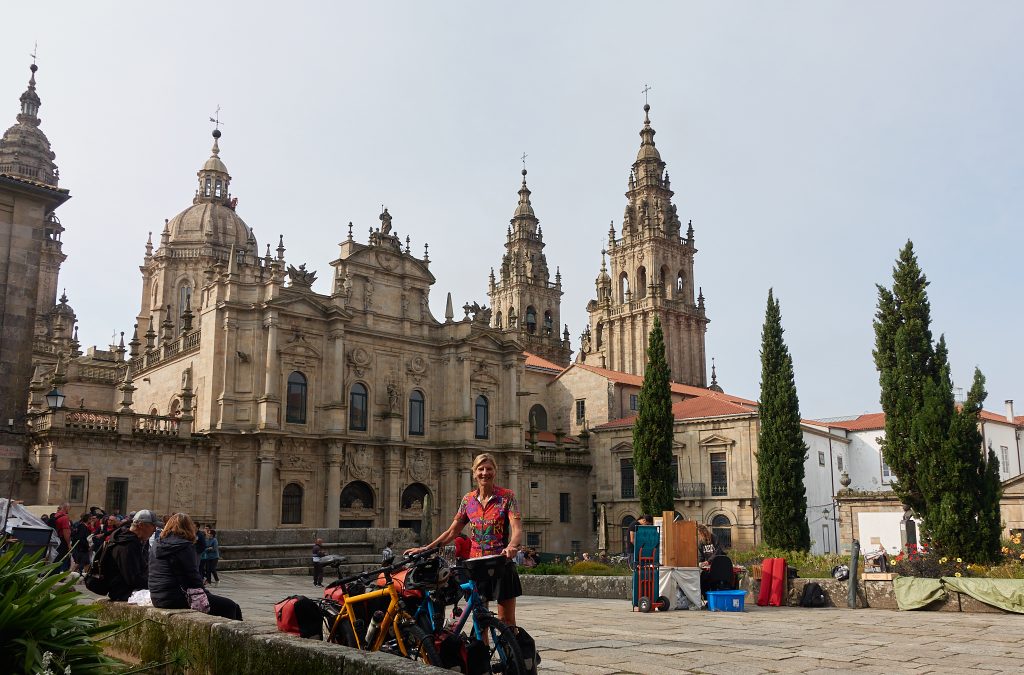
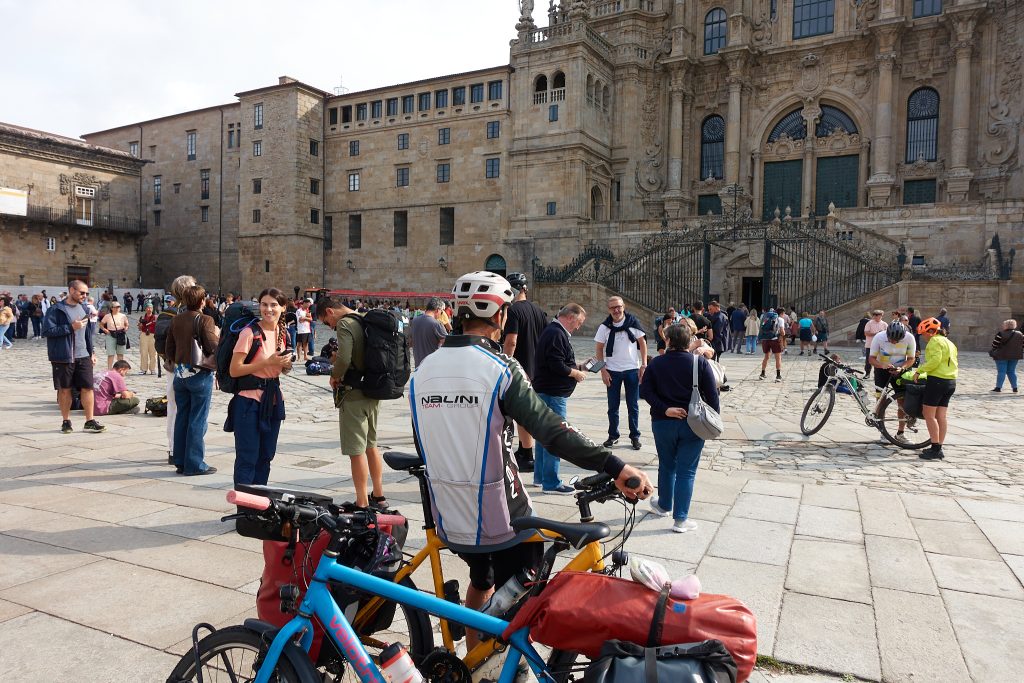
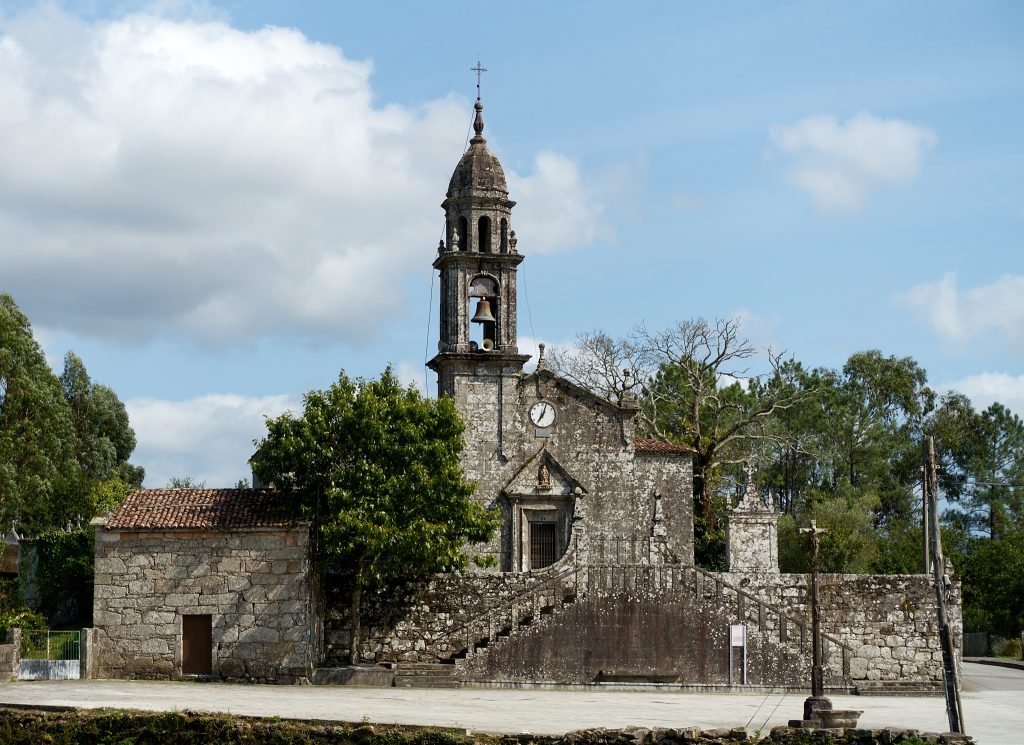
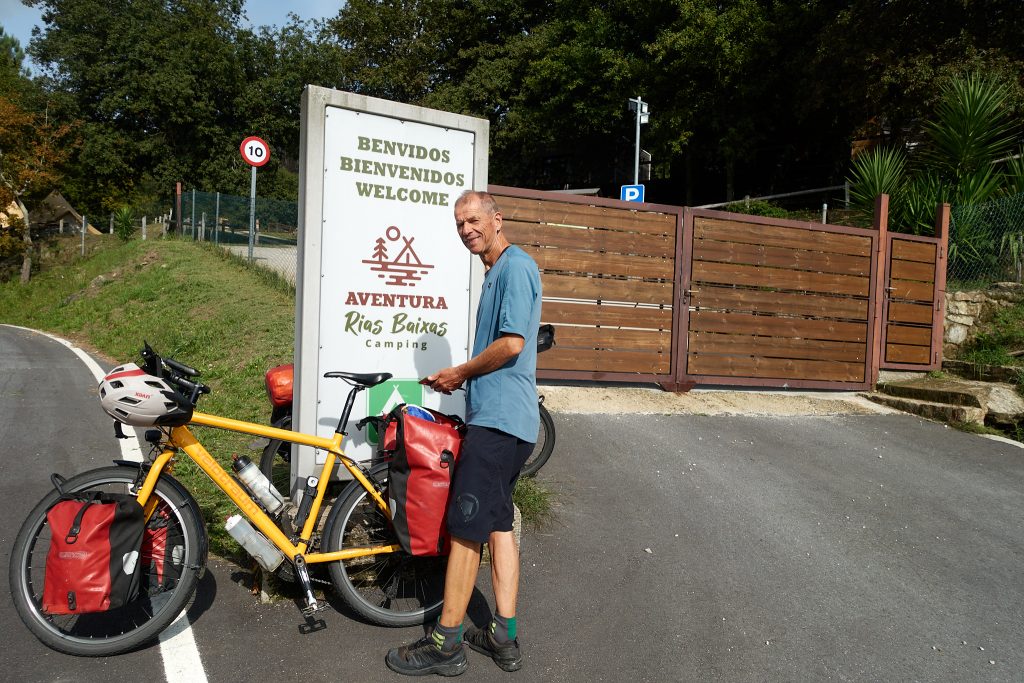
When we set off from Santiago, we do not yet know what the day will bring. We have planned a short stage, as the weekly report is due. After being invited for coffee by two Strasbourg residents at the campsite, visiting the cathedral and taking a few breaks, we reach our chosen campsite at 5 pm.
We head for Galicia’s third largest city, Pontevedra, cycle another 20 kilometres and spontaneously book a 60 square metre flat for 41 euros, checking in ninety minutes later. Excellent location with a view of the harbour, open-air music – it is Friday evening – bars and supermarkets in the immediate vicinity. Booking is sometimes really great for us spontaneous travellers.
The Galicians do not understand why we are continuing on to Portugal when it is so beautiful here.