Because nobody in Europe is able to pronounce it, Central and Western Europeans call it Montenegro (= Black Mountain, = Crna Gora).

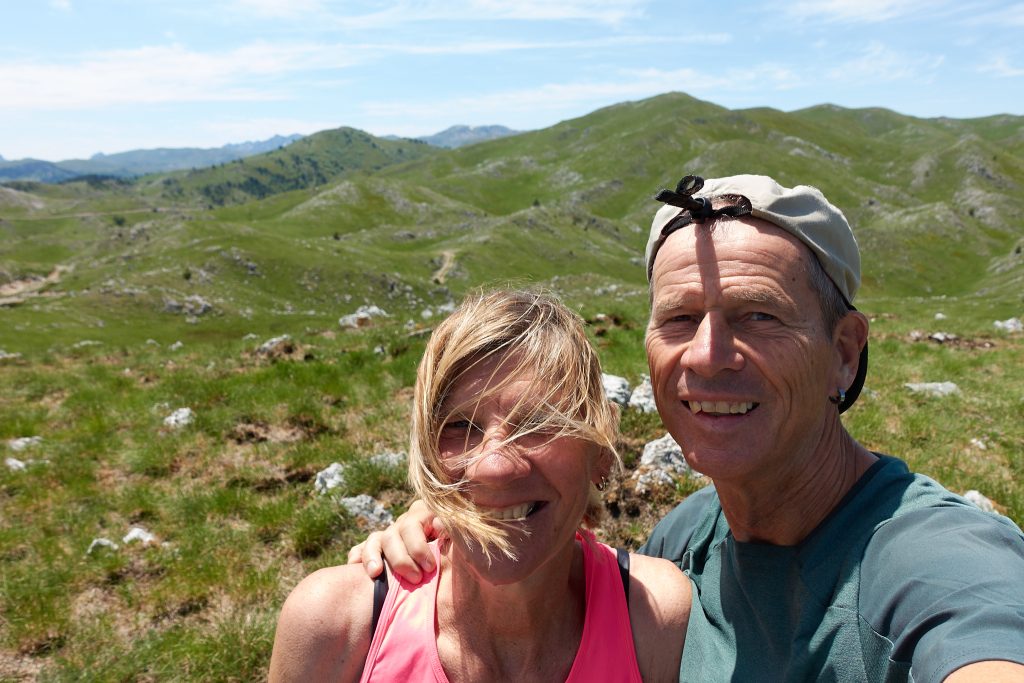
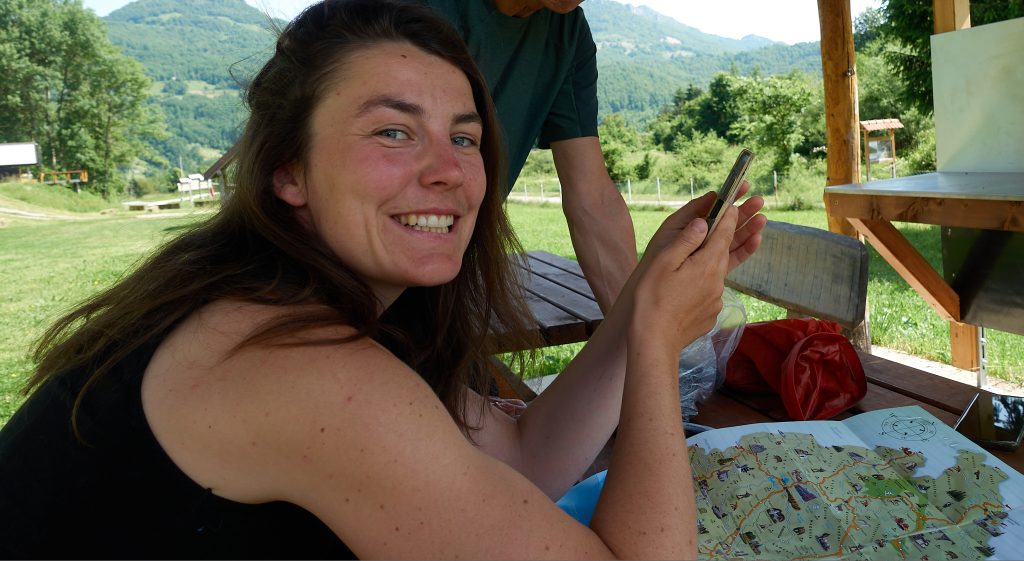
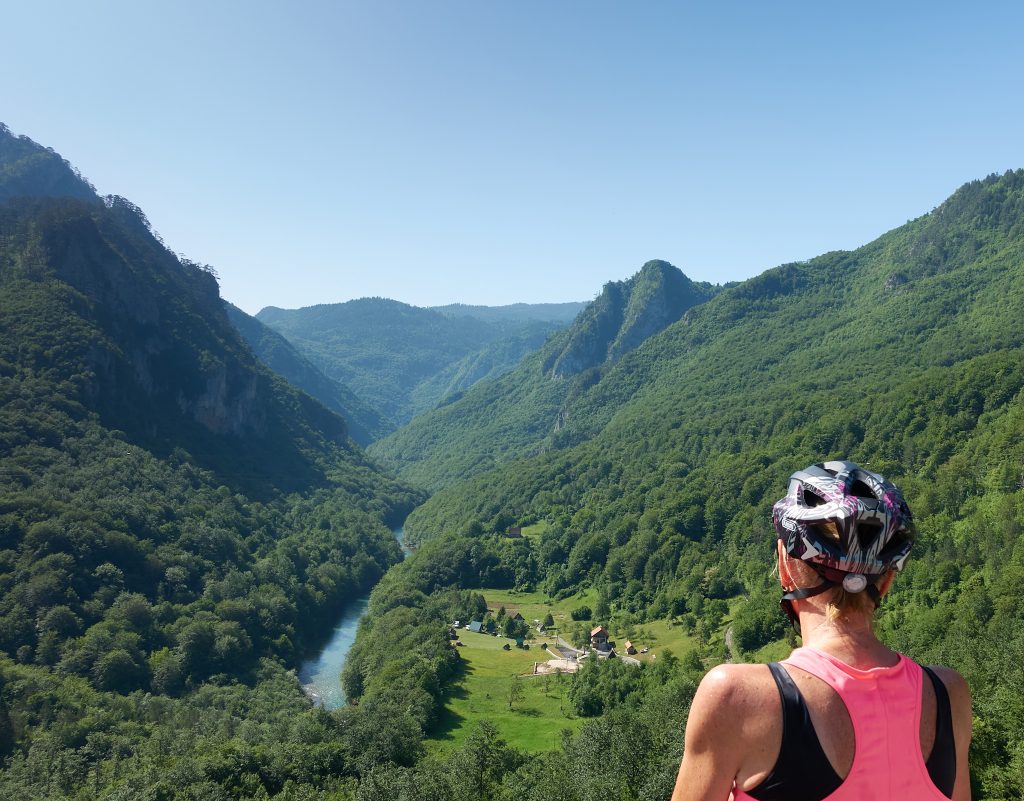
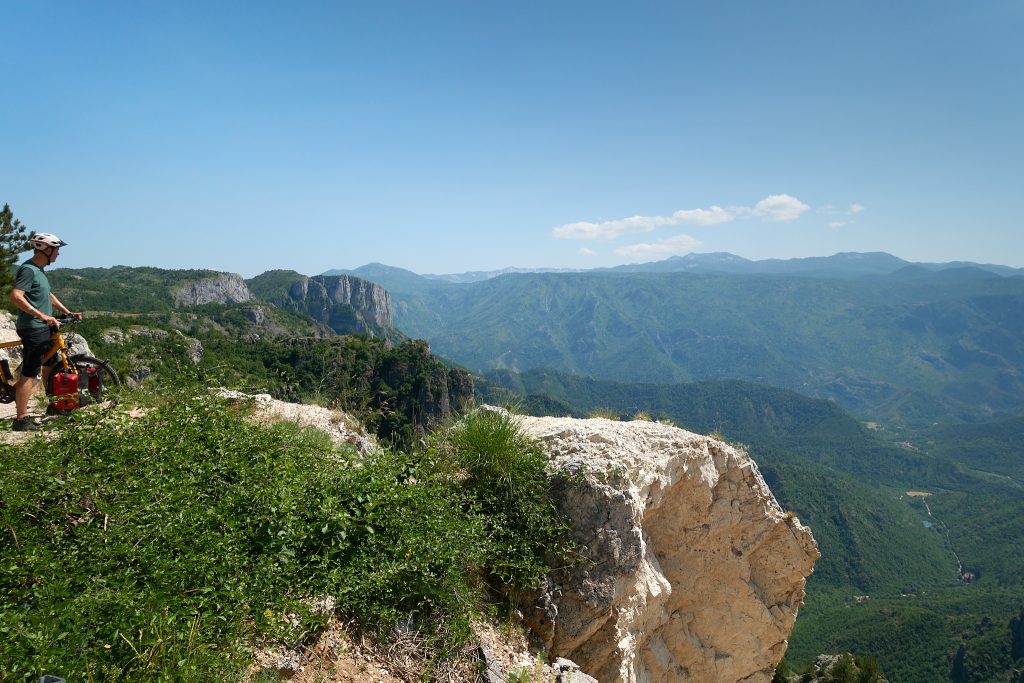
With 78 kilometres, the Tara Gorge is Europe’s longest and deepest gorge, with rock faces more than 1300 metres deep. Michi, who we met in Albania, lured us here. Due to a landslide, our planned route into the gorge and the magnificent Durmitor National Park with the mountain that gave Montenegro its name is completely closed for a year. There is no alternative. The bypass is 150 kilometres long or we cycle back to the capital on the route we climbed up two days ago on the panoramic train. Both sound stupid. Luckily, we meet Romi from Munich who, coming from the opposite direction, convinced the construction workers yesterday that she could cycle past the closure after work.
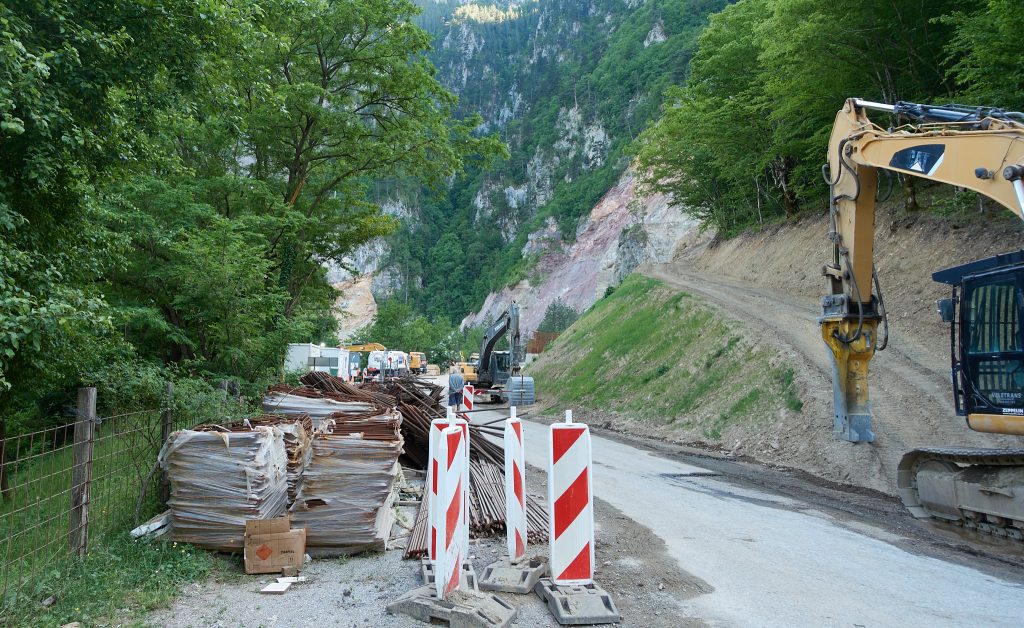
At late afternoon, a few cars and a group of motorcyclists stand in front of the barrier. After consulting with the construction workers, some of them turn round. A group of Polish motorcyclists take a look at the construction site with drones and discuss it again. We practise patience. The barrier is closed. The construction workers have finished work. After an hour, a car drives up. The barrier is unlocked and lets us all in. We pass the construction site together. Both, our touring bikes and the motorbikes, master the temporary gravel track which is about 800 metres long. At the other end, the construction site is secured again. The motorbikers hand a large wad of money through the driver’s side window and the journey continues. (We did not pay the toll, as we could have pushed our bikes under the barrier).
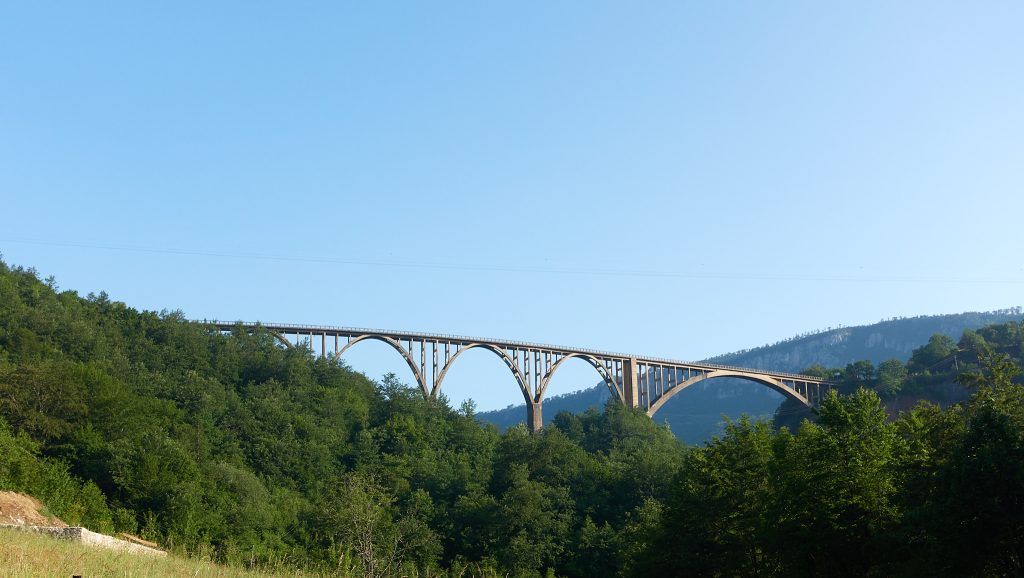
Durdevica Tara bridge over the gorge. On the bridge we have a great view of the Tara and our campsite. There we meet a german motorbike-rider. He does not think Montenegro is so great, too much undergrowth.
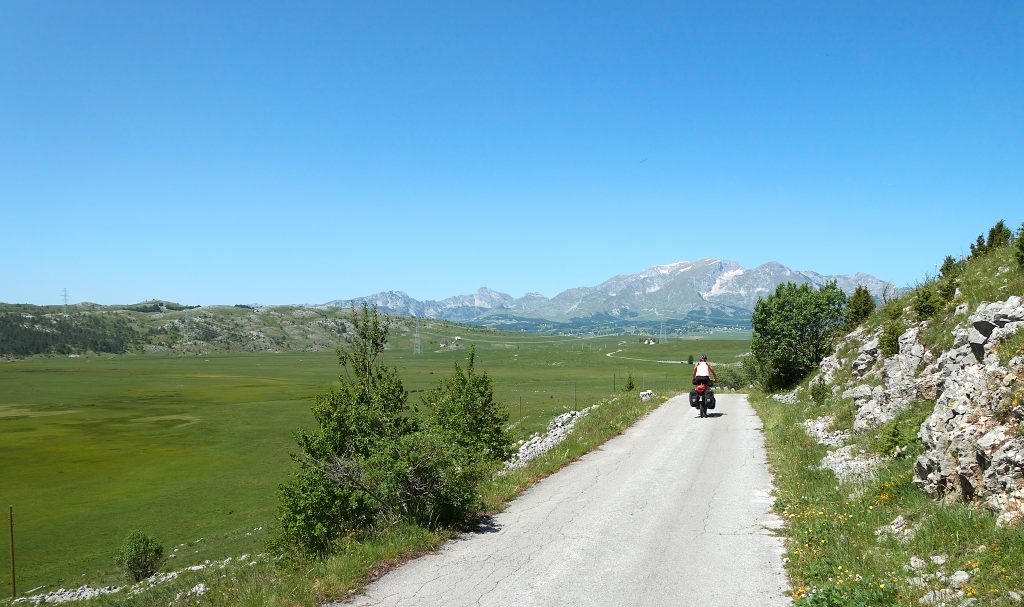
A few kilometres further on, we climb up to a high plateau (1400 MSL). The road leads through the Durmitor National Park. Even in the Montenegrin summer, it is still quite wintry up there. Many meadows, wooden huts and black mountains accompany the journey.
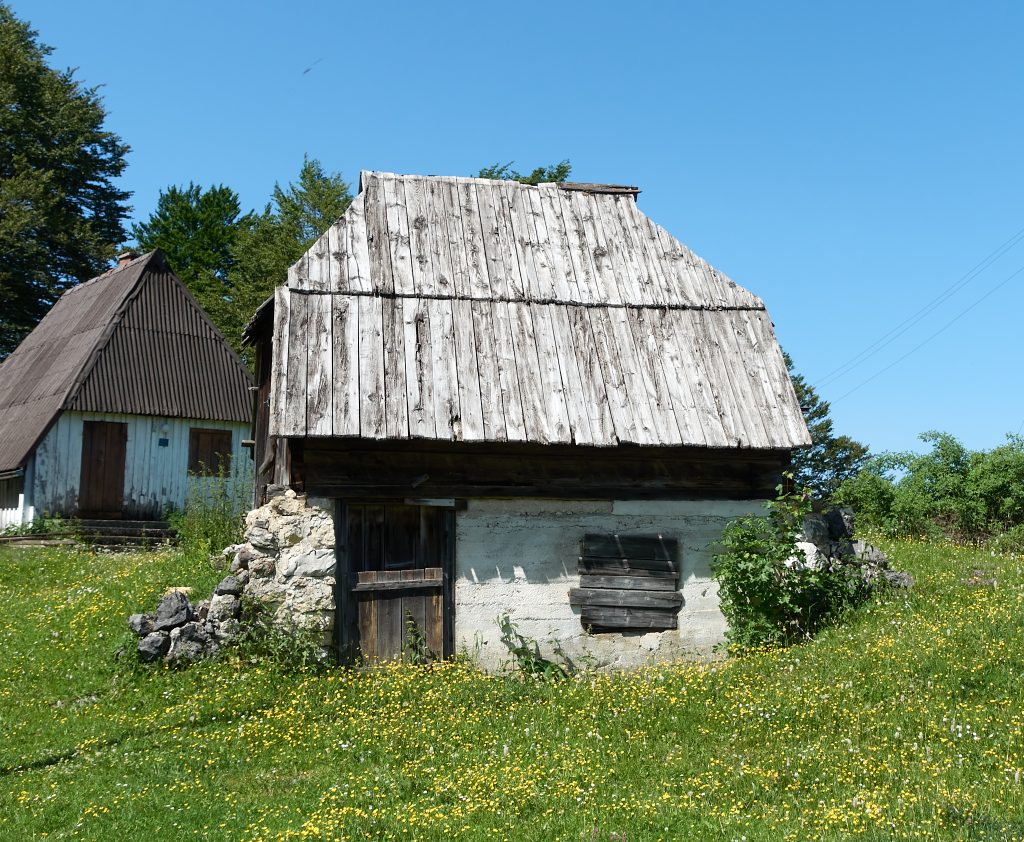
After many metres in altitude and long descents, we reach the campsite just before Nikšić. Alex, the ex-professional footballer who gave up his career due to a bad knee, makes campers happy with his garden.
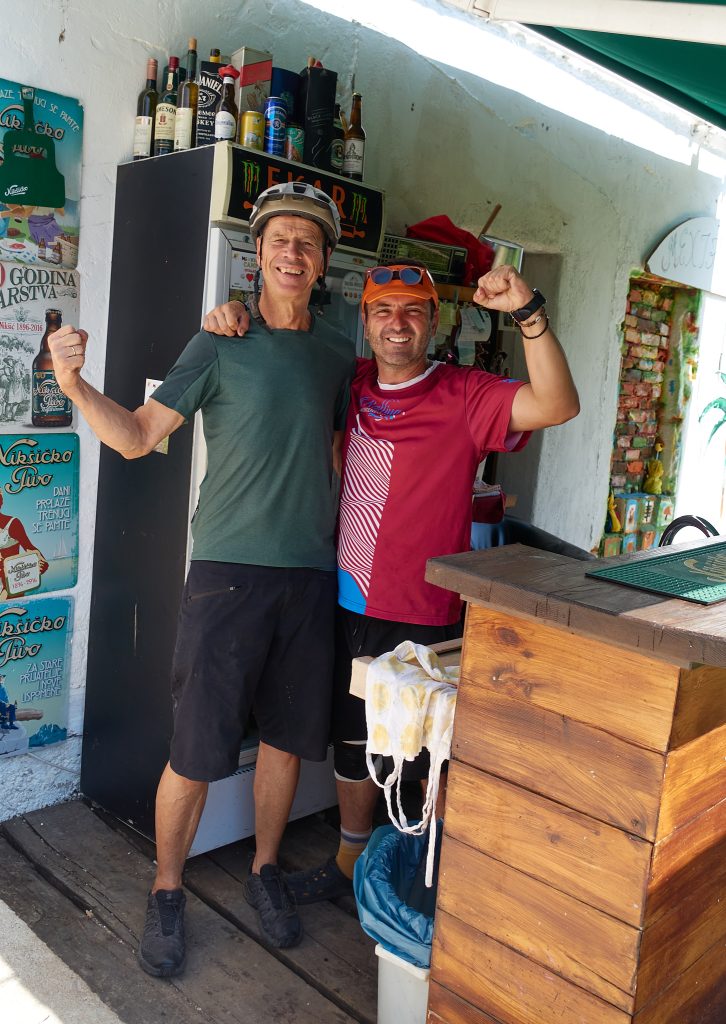
We shower in Grandma’s bathroom and use the toilet in his house. It is our last night in Montenegro.
On our way across Nikšić towards Bosnia-Herzegovina, we meet two women from Ekatarinenburg (RUS) at the old bridge. They have been living in Montenegro for two years and work remotely. They are very happy to meet us. Their knowledge of Russian is once again a door opener, English on both sides makes a good exchange possible and the meeting is ideal for reflecting on prejudices.
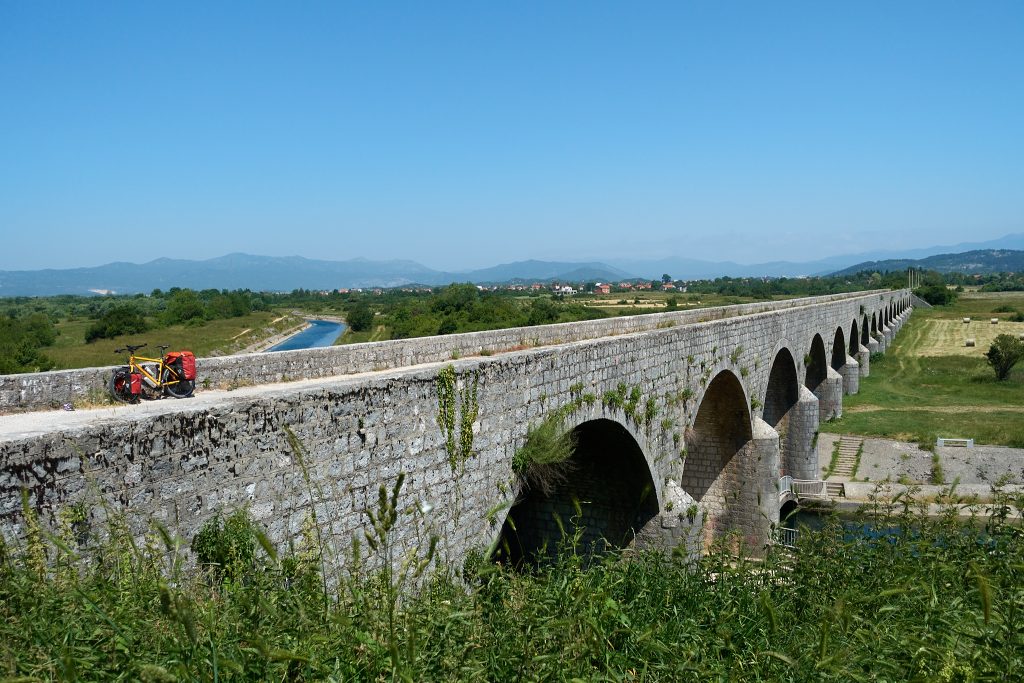
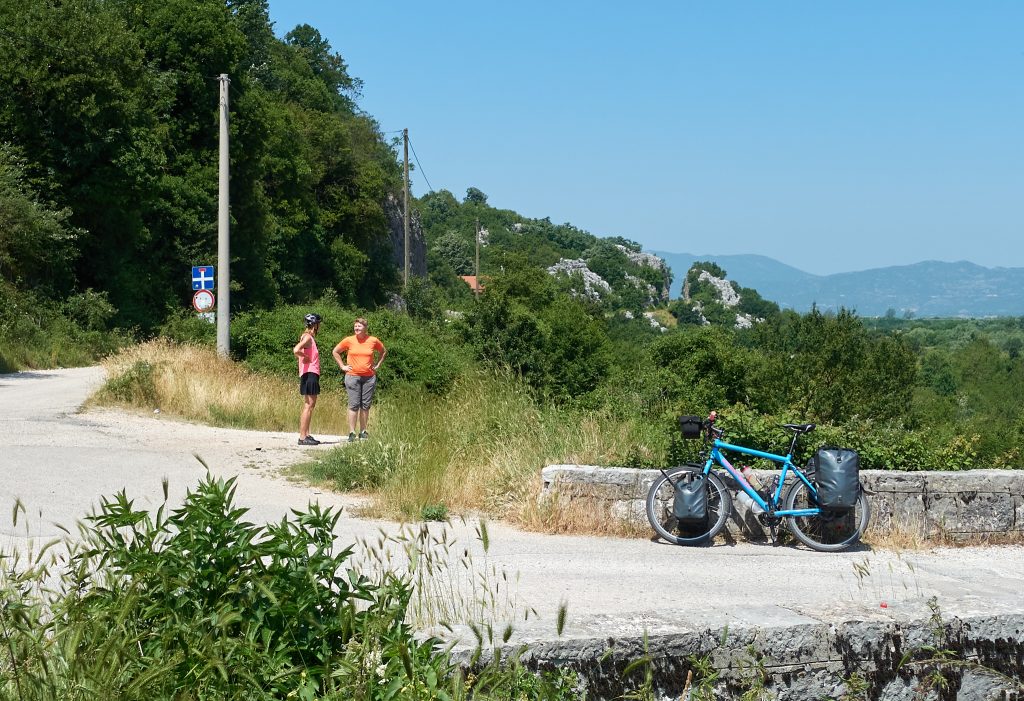
The border region of Montenegro – Skripsa in Bosnia is another real hit in terms of nature and an insider tip.
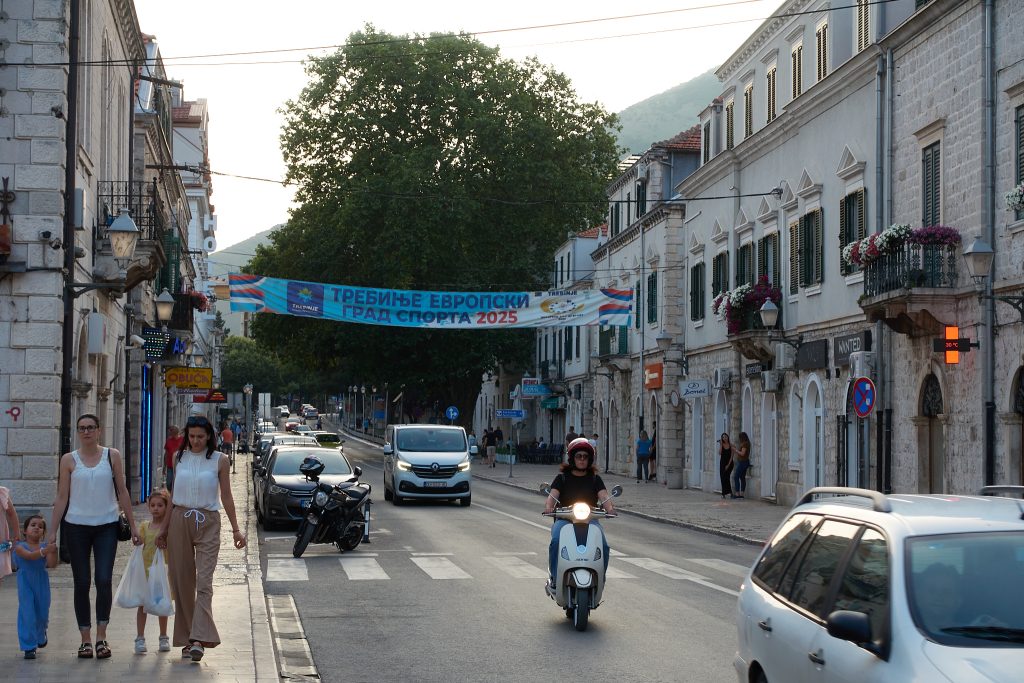
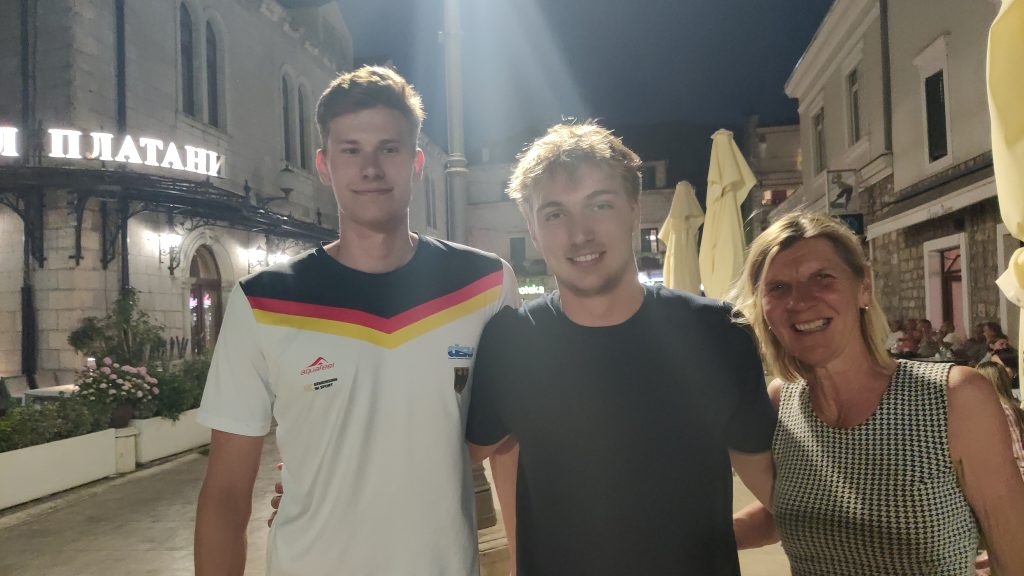
A great evening in the sporty town of Trebinje and overnight stay in the Lavender Room.
We are heading back to the regulated and standardised EU, to Croatia. We have a bit of a flutter and worry about the dreamlike and therefore highly touristic Mediterranean coast. Here, goods and services are sold for hard currency, no deviation. It is like at work, when the small official channels get narrower and narrower and eventually become overgrown.
We cannot say whether the Croatians are friendly or nice. We simply do not meet any. We cycle through moderately busy holiday settlements and spend the night in a bay where there is only a huge campsite, which is full due to the Whitsun holidays.
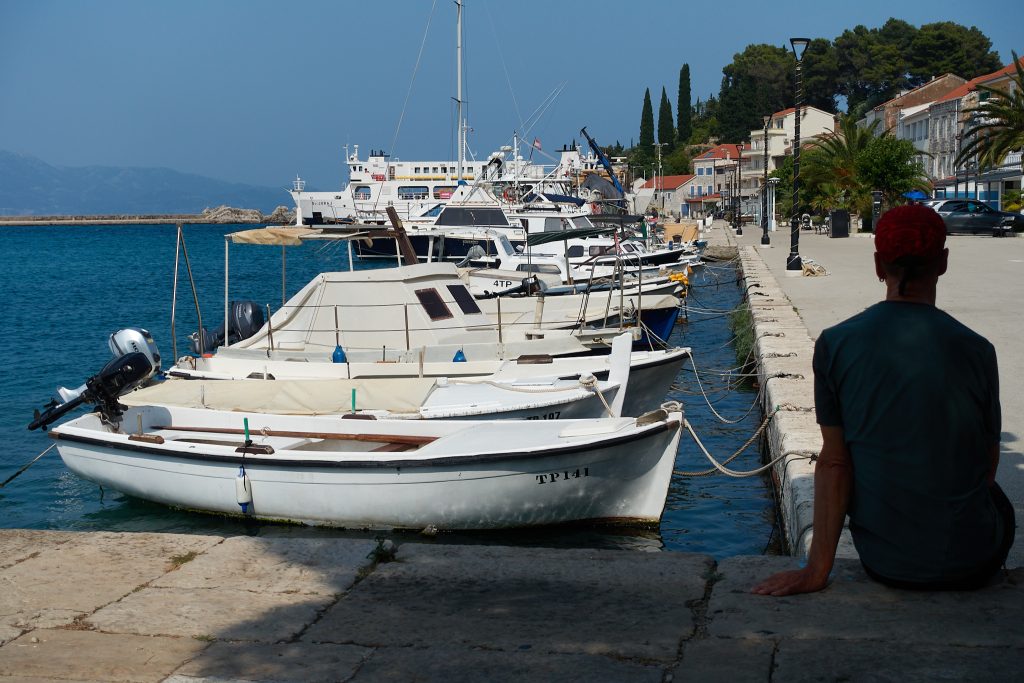
And … summer has arrived: the colourful meadows are replaced by barren karst landscape and largely dry grassy areas, blue-turquoise sea, bright blue sky without a cloud and shimmering heat.
The eastern bypass of Dubrovnik is a blast thanks to Graphhopper. We simply cycle stress-free bypass Dubrovnik and half a day’s ride later onto the Peljesac peninsula. Following EuroVelo 8, we arrive at the Trpanj ferry harbour and take the ferry that takes us to the harbour town of Ploče.
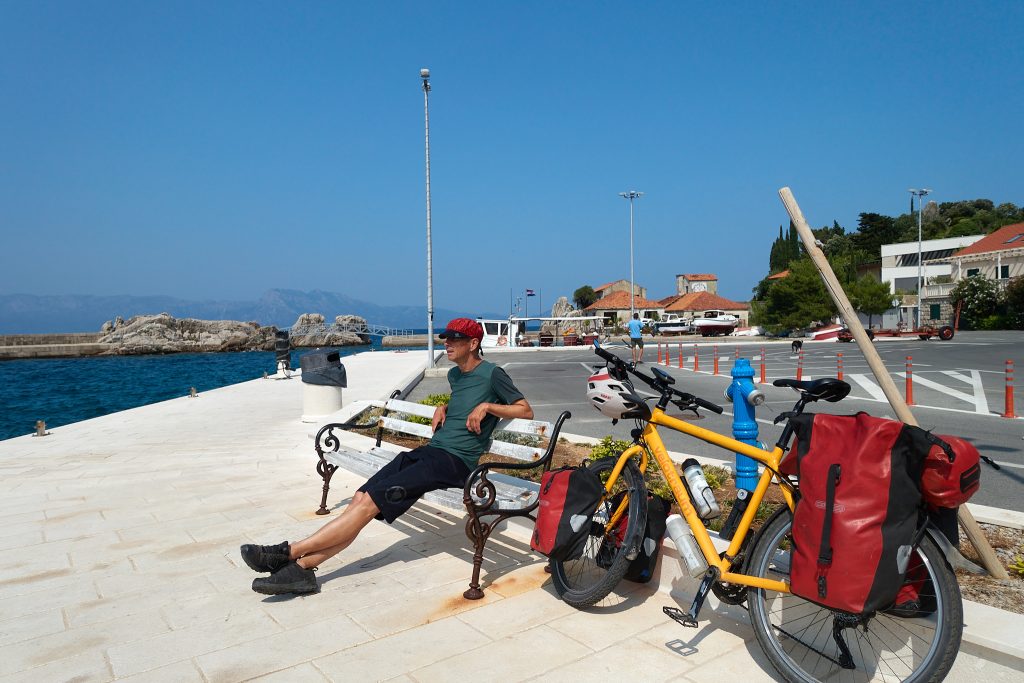
Ploče is a Croatian harbour town with very little tourism. It has a lot of socialist charm. The apartment we booked is a dream, with all the bells and whistles and a very friendly host. The block of flats in which it is located would probably put most people off. It is not the first time we stayed here, so we are very excited to see what it is like behind the gloomy façade.

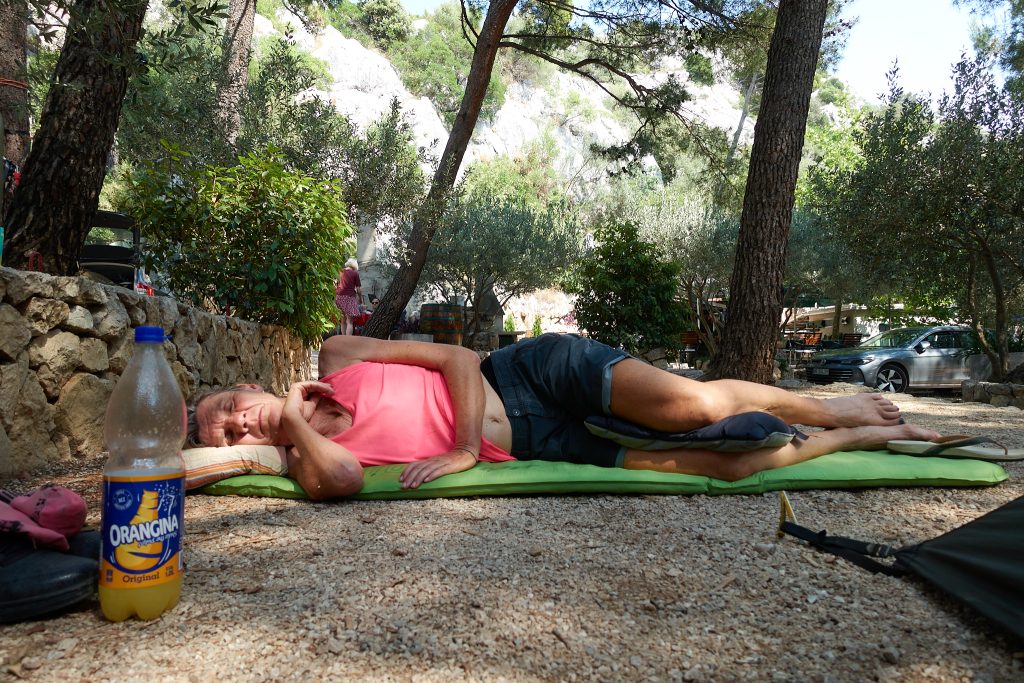
We are writing this article at Camping Krvavica, sixty kilometres south of Split: an oasis of peace under shady pine trees with very friendly, attentive operators, in a bay with crystal-clear water, lots of campers and people who still know camping from the old days, just really kitschy and great for chilling out.