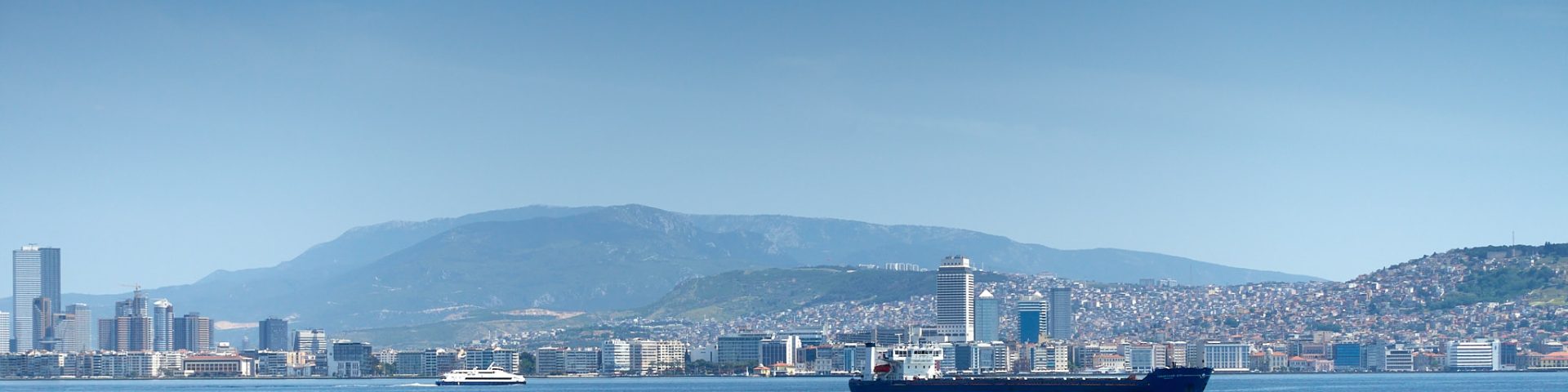
There is a car ferry across the Gulf of Izmir. The departure is very close to our accommodation, then another 50 kilometres to Bosnalti. We meet Oktay at the check-in. He is riding his Riese&Müller bike to work for the first time this year, heralding the start of the six-month summer season. One hour by bike, twenty minutes by ferry, and then another fifteen minutes to his textile company. As we do not have an ‘Izmirim Karta’, he helps us out with tickets and we strike up a conversation. Born and raised in Frankfurt, he has lived in Turkey for 24 years and is Armenian at heart. He had founded a German-Turkish textile company Serotonin in Frankfurt and Istanbul in 2009. Nine month ago he set up a production facility in Izmir. He invites us for a cup of coffee in his office and gives us a tour of the production, tailoring, sewing, pattern department and marketing. We are happy to take a break and a detour from our route.
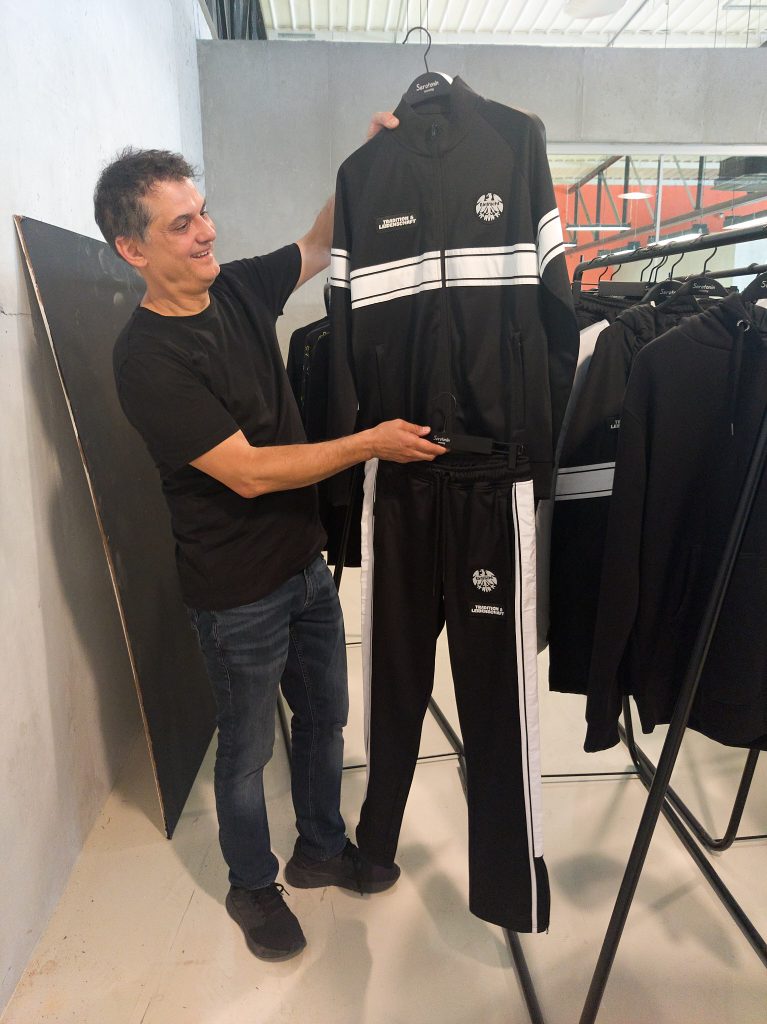
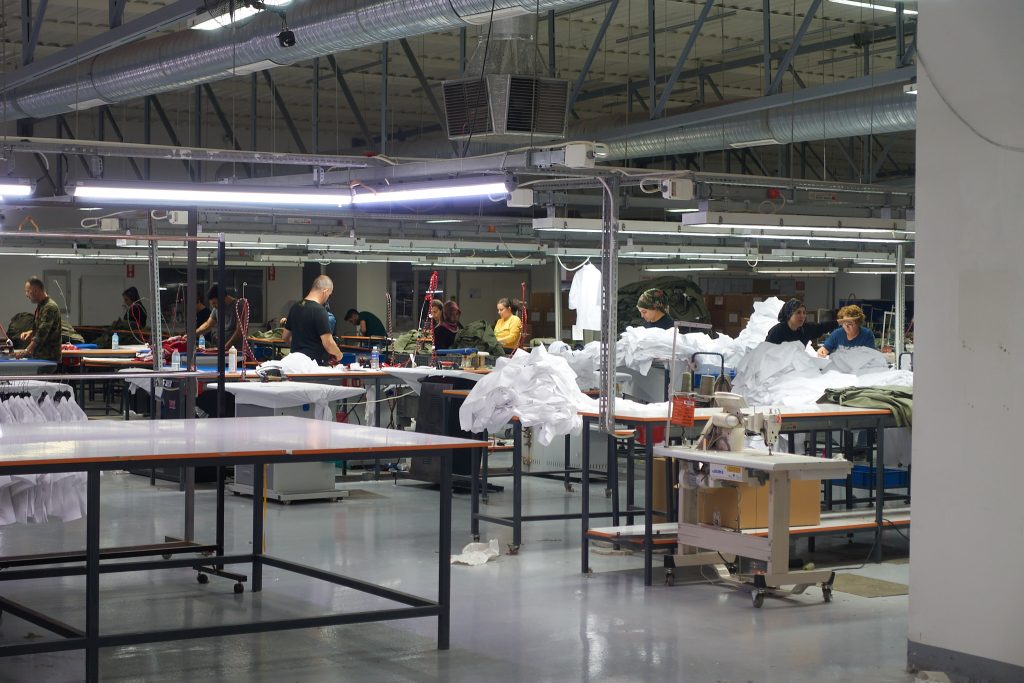
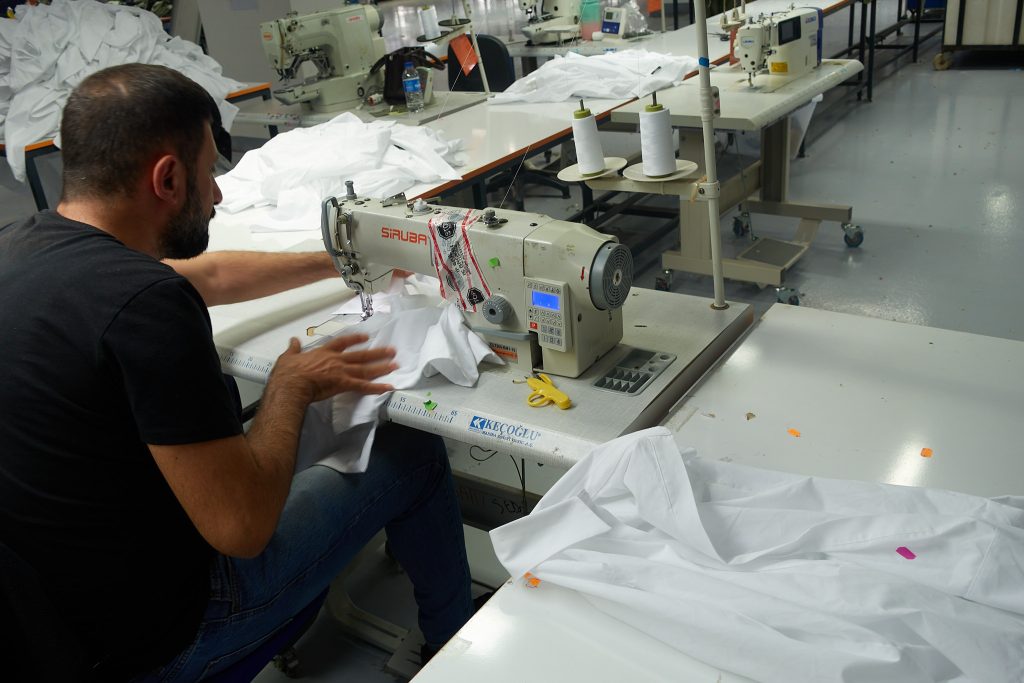
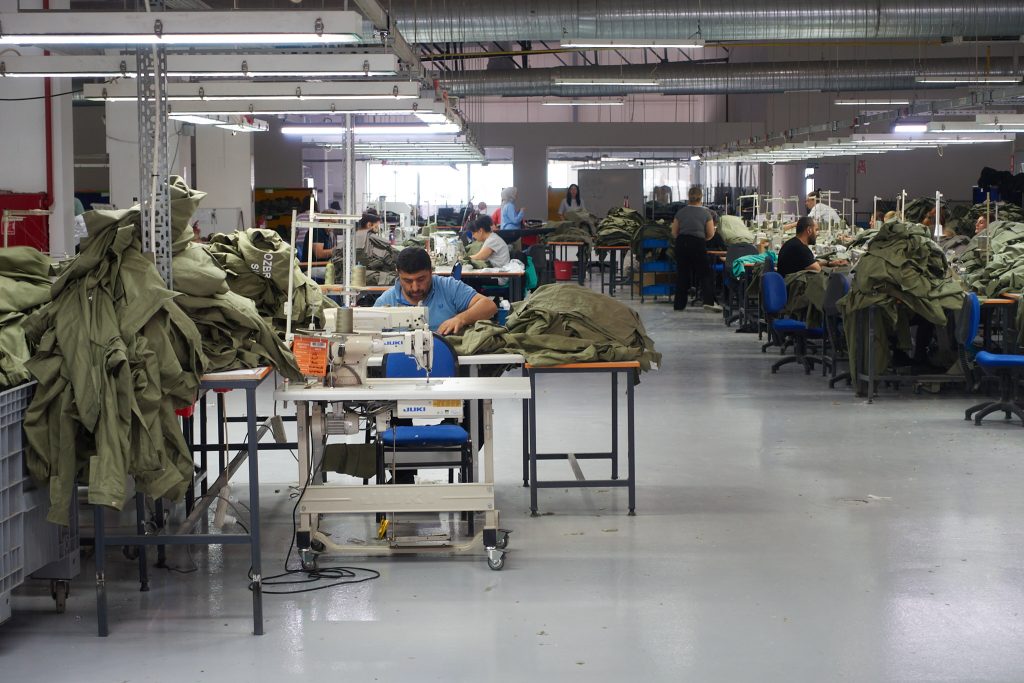
It is impressive to see how many manual steps are required to produce an item of clothing. After two hours, we leave the company named after the happiness hormone serotonin. We have made a note of tips for our next destinations and a possible visit to Istanbul. We will soon be looking at the labels before we buy any clothes. We will go for ‘Made in Turkey’.
We cycled to Izmir. Turkey’s third largest city after Istanbul and Ankara. An estimated 4.5 million inhabitants. We found a small hotel in Balcova, a suburb in the south-west of the city. The journey through the city to our destination is adventurous. The routing is not ideal and more than once we ride on busy 6-lane motorways and then have to get into the left-hand lane with our warhorses to turn off. The city is as hilly as our previous journey, a bit like San Francisco. So we are glad when we reach our hotel.
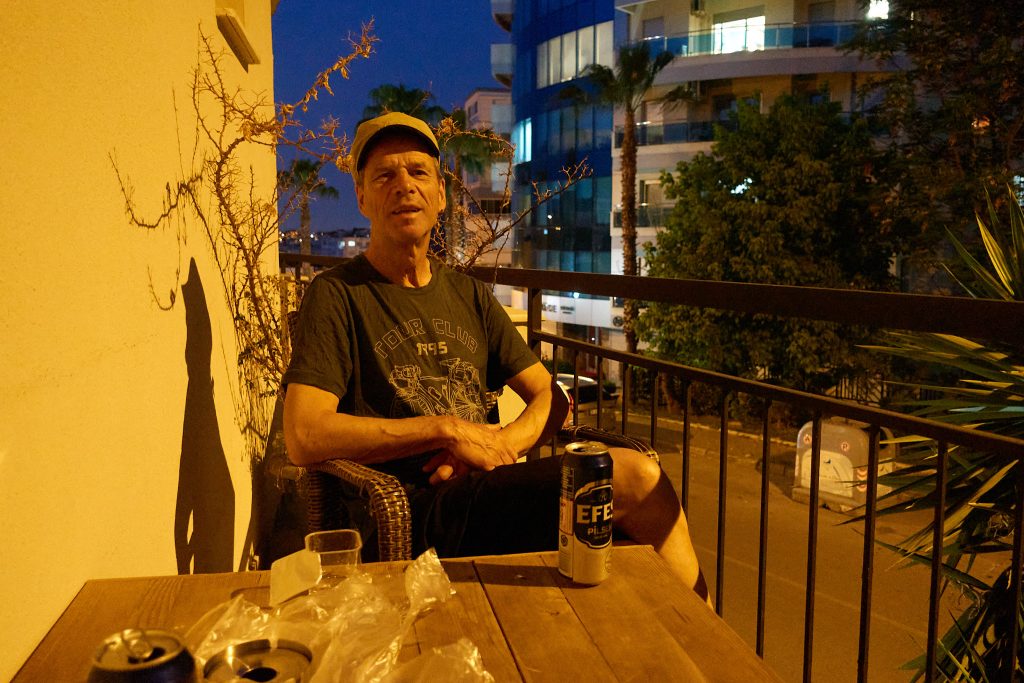
Just arrived, we immediately book a second night. If we have already come this far, we will make the most of it. The next day we visit Izmir by public transport, metro, boat and on foot.
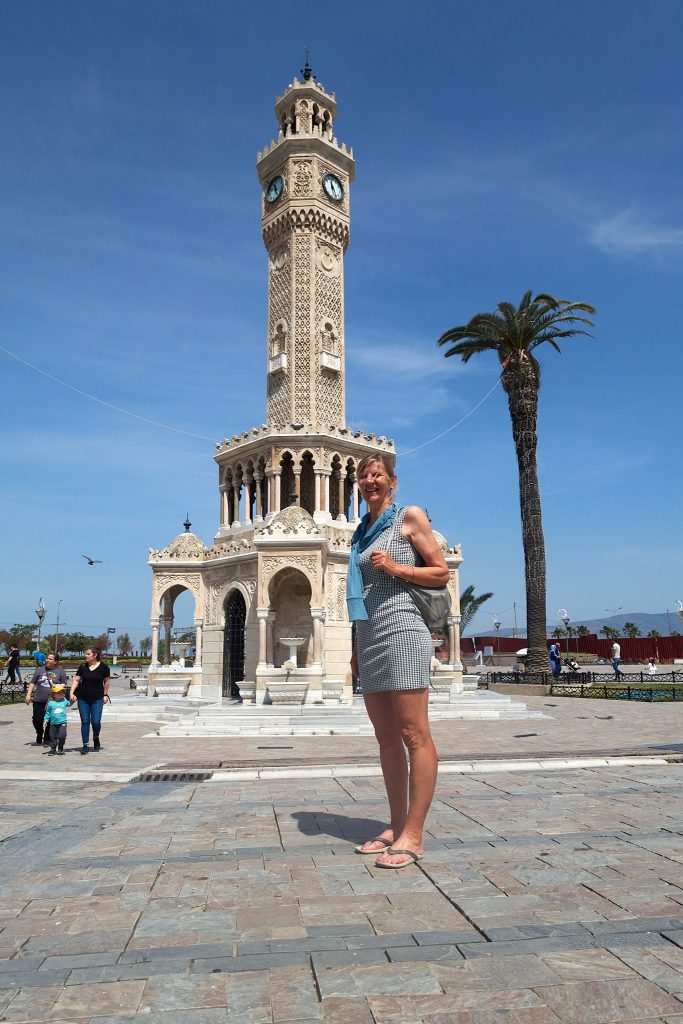
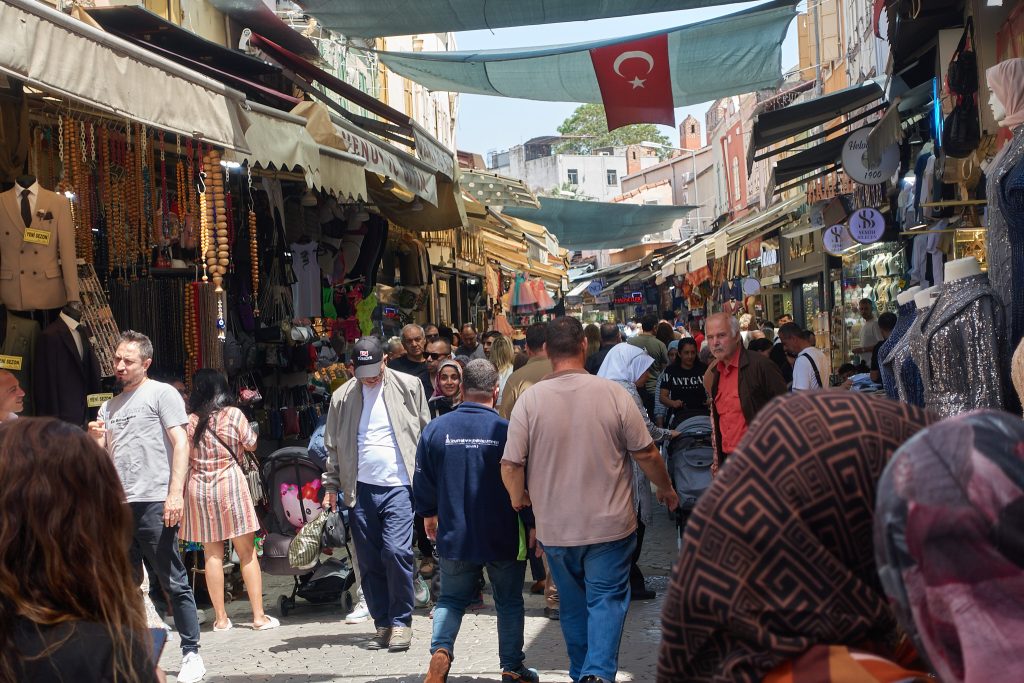
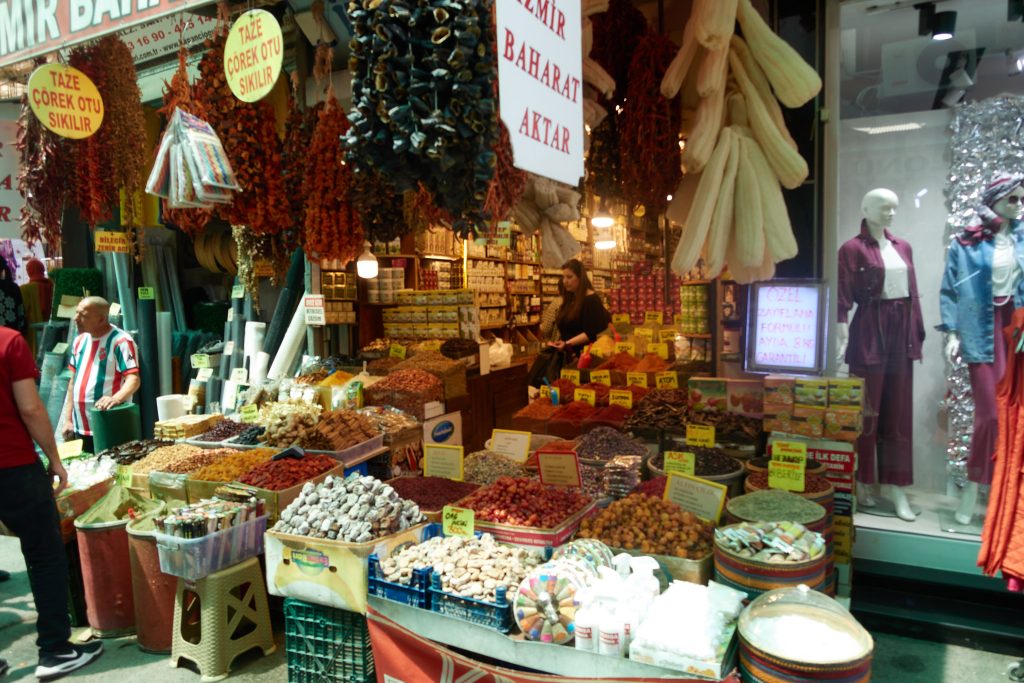
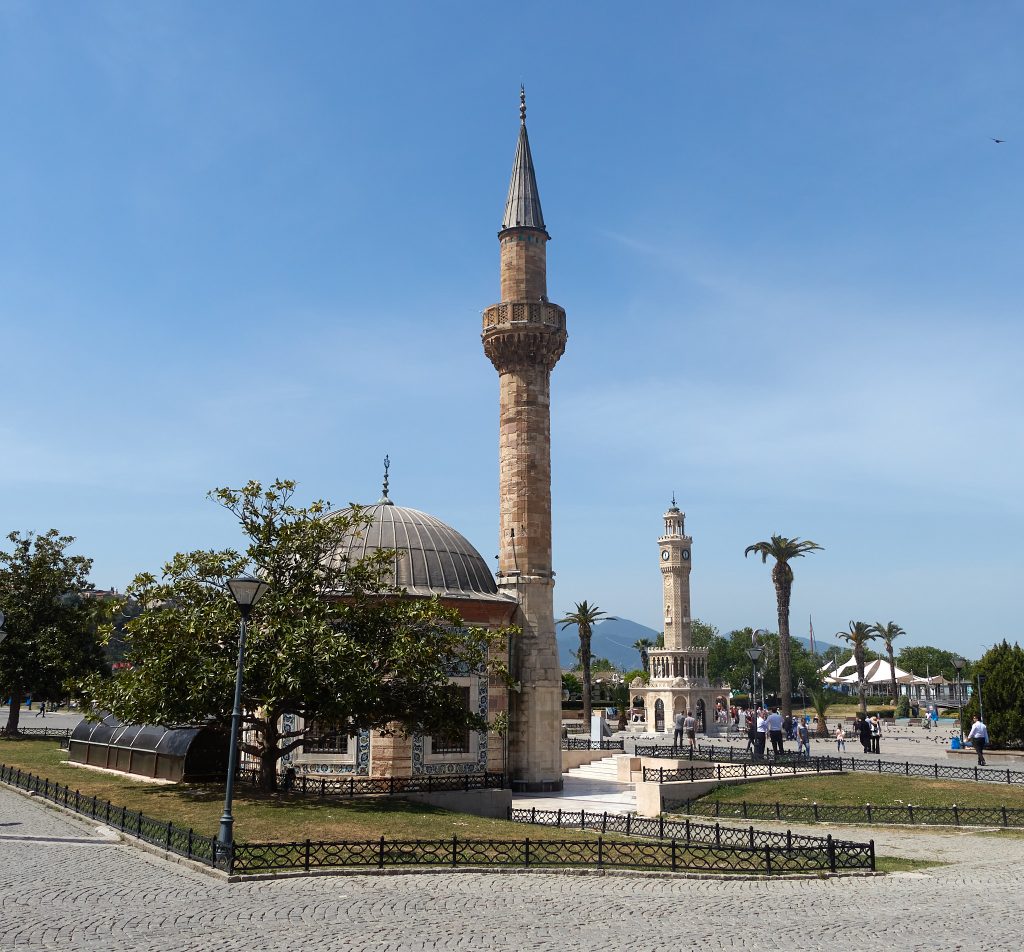
We take the passenger ferry to Bosnalti in the west of Izmir. Bosnalti is a pleasant surprise and, according to the official Turkish tourism website, the jewel of Izmir. There are parks, hip cafés and lots of young people enjoying this and the approaching summer. So we scout out the next morning’s journey.
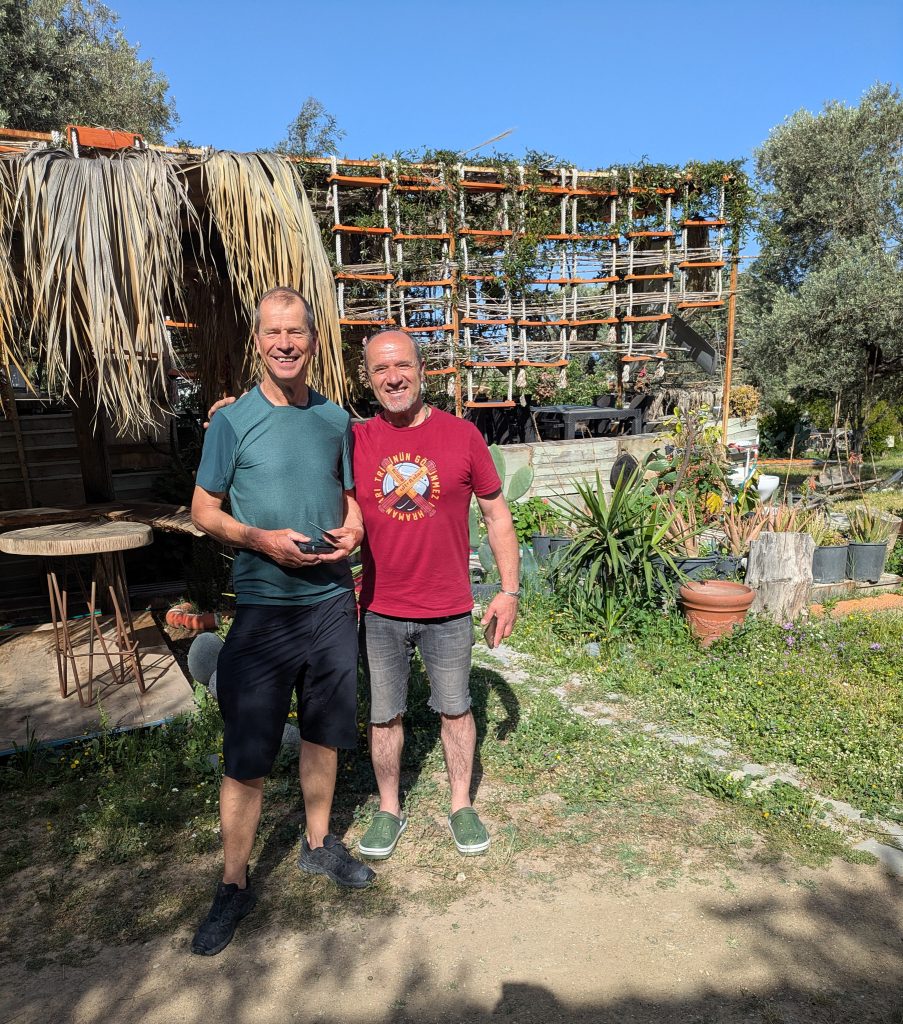
In addition to the owner of the textile company, this week we get to know a retired Turkish general who rides a racing bike and worked on the peacekeeping mission in Bosnia. He establishes a video link with his wife, herself a university German teacher. We also meet the wood artist Cem who runs a campsite near Foca, and Cem the Turkish Airlines pilot who is available to translate for us. Last, but not least, Resul who works at the Tavuckücuk (=chicken fryer) and has numerous siblings in Germany, as well as a bakery saleswoman who is very happy when we have breakfast with her for the second time. Someone say big cities are anonymous. Izmir is not.
A pig. It does not matter whether it is domestic or wild. Neither is eaten in Turkey.
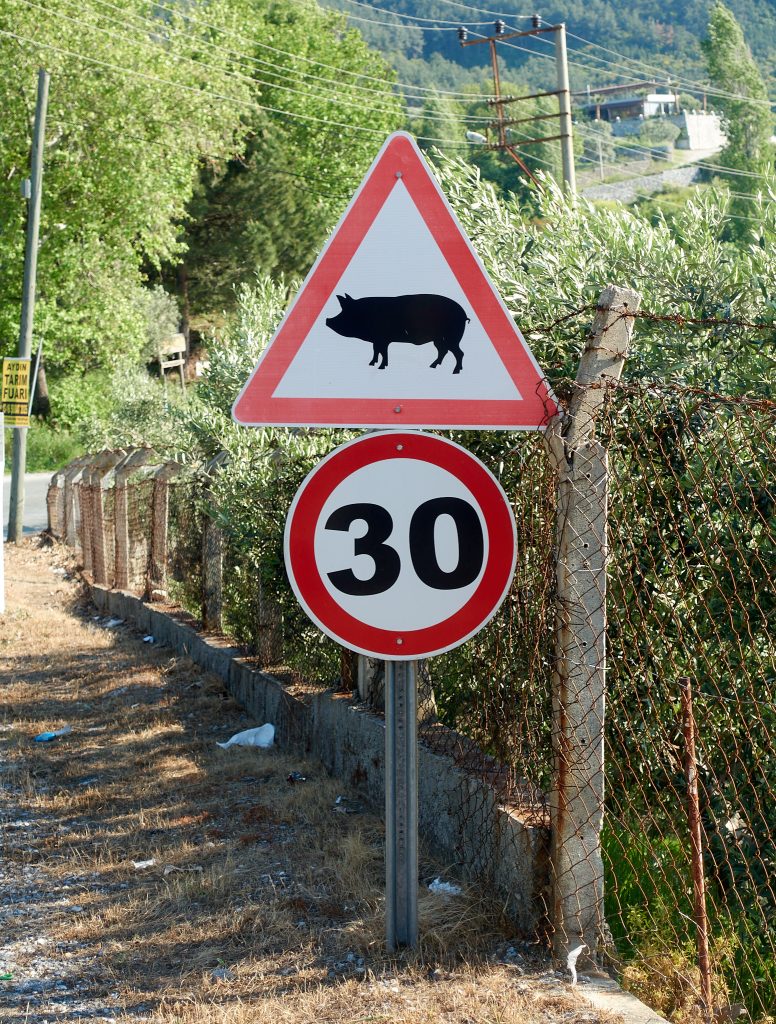
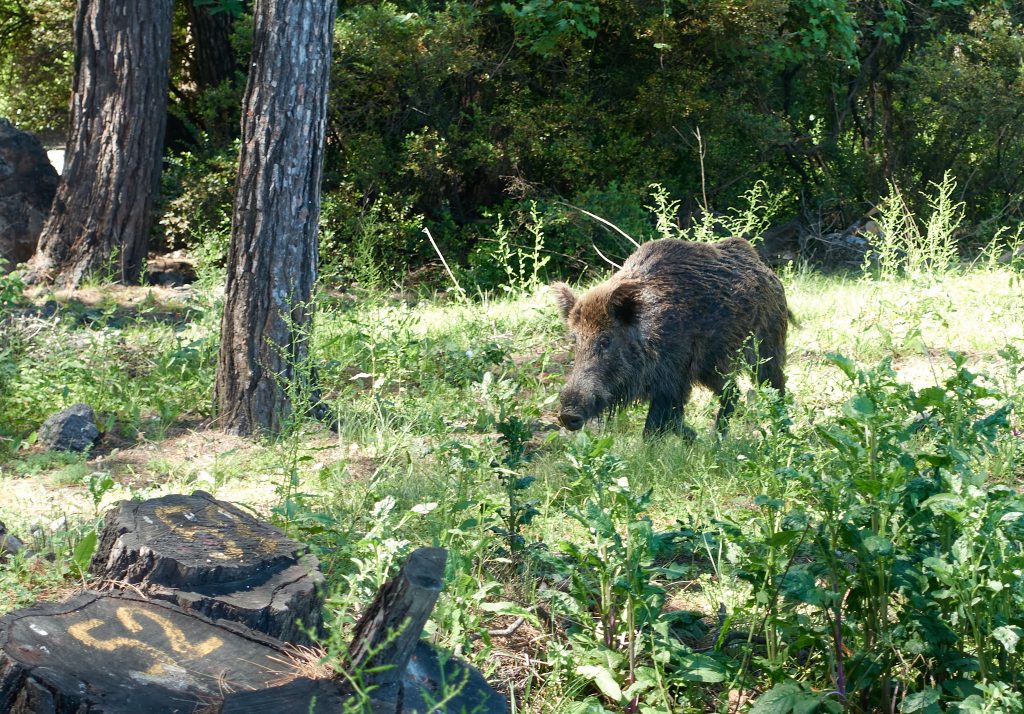
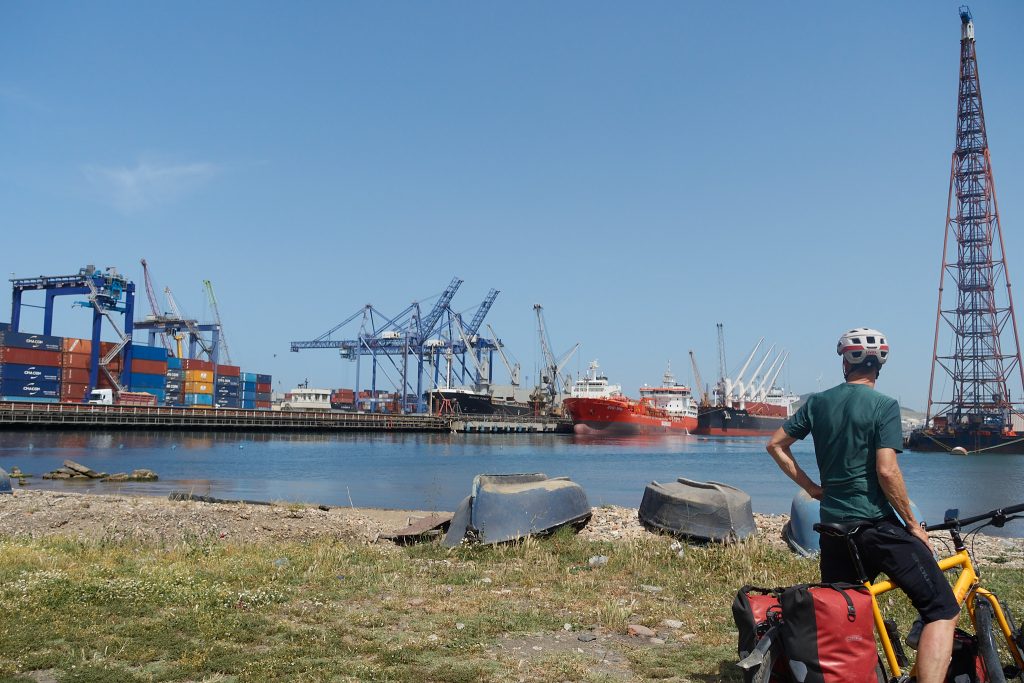
The Eurovelo (EV) 8 starts in the centre of Izmir, runs along the Mediterranean and ends at some point in Faro in Portugal. We follow it. Sometimes it seems to be well signposted, sometimes there are serious gaps. It takes us north of Izmir to the SOCAR terminal in Izmir’s Aliaga district.
This journey takes us through a huge area of over 100 hectares, crowded with heavy goods vehicles, ambulances, police, Securitas and the two of us on our bikes. It is not without reason that we get a windscreen wiper from the driver’s cab. The SOCAR terminal, Azerbaijani property, receives cargo ships from the Far East and enables the trade of petrochemicals, oil and natural gas from Azerbaijan without using the ports of the Pyrenees, Malta and the Suez Canal. It is the only port in the Aegean that allows the direct shipment of twenty million tonnes of products every year.
We cycle right through it, dusty, badly tarmaced, the sun blazing. At the end, we are escorted by Securitas who hand us two bottles of water from the window at the crossroads, before we are just glad to have survived the ordeal. In fact, there is no real alternative.